Best 115v Submersible Well Pump Options for Home and Irrigation
Finding a dependable 115V submersible well pump starts with matching flow, head, and durability to your well conditions. The top picks below are suitable for residential wells, farms, and small irrigation setups. They cater to different needs: higher flow for larger homes or gardens, deeper heads for deeper wells, and robust stainless steel builds for longevity. This guide highlights five strong choices and explains who each is best for.
| Product | Max Flow (GPM) | Max Head (ft) | Power |
|---|---|---|---|
| VEVOR Deep Well Submersible Pump (1HP) | 37 | 207 | 1HP, 115V |
| VEVOR Deep Well Submersible Pump (0.5HP) | 28 | 167 | 0.5HP, 115V |
| WASSERMANN 4″ Deep Well Submersible Pump (1HP) | 34 | 196 | 1HP, 115V |
| VEVOR Deep Well Submersible Pump (1.5HP) | 37 | 276 | 1.5HP, 115V |
| Hallmark Industries MA0414X-7 (1HP) | 33 | Unknown | 1HP, 115V |
VEVOR Deep Well Submersible Pump — 1HP, 37GPM, 207ft Head

The 1HP VEVOR model provides a high flow of up to 37 GPM with a 207 ft head. It uses a 4″ stainless steel body and 1-1/4″ discharge, suitable for 4″ or larger well casings. The copper motor supports stable operation and includes overheat protection for safety. This pump comes with a 33 ft cord, simplifying installation in many off-grid or plumbing-challenged settings. Best for medium-to-large households or irrigation tasks where depth and throughput matter.
Who it’s best for: homeowners with moderately deep wells who need strong flow for households or garden zones. Why selected: it balances flow, head, and durability at a realistic price point. Limitation: operate only when submerged and with sufficient water to prevent idle running.
VEVOR Deep Well Submersible Pump — 0.5HP, 28GPM, 167ft

This 0.5HP option delivers up to 28 GPM with a head of 167 ft. The 4″ stainless steel design ensures resistance to corrosion and long life in water environments. It includes a 33 ft electric cord and uses robust thermoplastic impellers. Best for smaller homes or light irrigation where a compact, cost-efficient pump is preferred.
Who it’s best for: households with shallower wells or limited pump demand. Why selected: excellent value for smaller workloads. Caution: lower head than larger models means it may not reach very deep wells without sacrificing flow.
WASSERMANN 4″ Deep Well Submersible Pump — 1HP, 34GPM, 196ft

WASSERMANN offers a 1HP, 34 GPM unit with a 196 ft head and a stainless steel build, designed for reliability in 4″ wells and larger. It features a built-in capacitor start and a hermetically sealed motor for longevity. Best for users needing strong performance in deeper wells or challenging irrigation setups. Limitation: like many well pumps, efficiency declines if run dry.
Who it’s best for: rural setups or farms with deep wells where dependable performance matters. Why selected: solid stainless construction and practical head-flow balance. Caution: ensure water availability to prevent idle running.
VEVOR Deep Well Submersible Pump — 1.5HP, 37GPM, 276ft

The 1.5HP model pushes 37 GPM with an impressive 276 ft head, ideal for deep wells or heavy irrigation demands. It includes an external control box and a 33 ft cord for flexible installation. Made with stainless steel and IP68 waterproof rating to resist corrosion and provide extended life. Best for demanding applications where depth and throughput go hand-in-hand.
Who it’s best for: households or farms with deep wells and high water needs. Why selected: highest head rating among the compact 4″ class in this list. Caution: larger motor may require a robust power supply and proper electrical setup.
Hallmark MA0414X-7 Deep Well Submersible Pump — 1HP, 33GPM
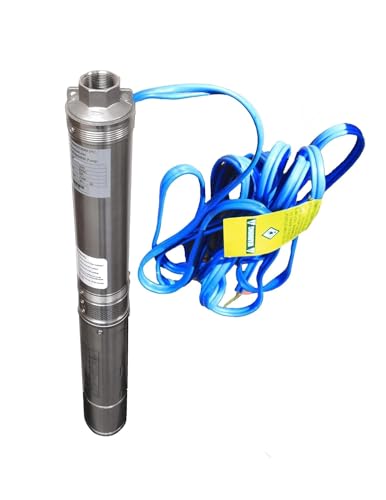
Hallmark MA0414X-7 is a 1HP stainless steel deep well pump rated for about 33 GPM. It fits a 4″ well and uses a 1-1/4″ discharge. The design emphasizes long life and straightforward operation, with a practical balance of flow and head for typical residential wells. Best for standard-duty use where reliability and simple setup are priorities. Limitation: exact head rating is not stated beyond the product line, so verify if your well demands maximum head.
Buying Guide
- Well depth and head: Match the pump’s max head to the total dynamic head caused by well depth, piping, and elevation. Choose higher head if your well is deep or you have long suction lines.
- Flow rate vs. storage needs: Higher GPM is beneficial for homes with multiple fixtures or irrigation zones. For small households, 20–30 GPM often suffices; for larger properties, aim higher.
- Material and durability: Stainless steel builds resist corrosion and provide longer life in submerged environments. IP68 ratings indicate strong water resistance in the motor and housing.
- Power considerations: Verify that your electrical setup can handle the motor size (e.g., 1HP, 1.5HP). A dedicated circuit is often recommended for pumps with higher current draw.
- Cord length and installation: A longer power cord offers flexibility for well placement. External control boxes can simplify wiring but may add cost.
- Protection features: Overheat protection and automatic shutoff help prevent damage if the pump runs dry or stalls.
- Maintenance and parts: Look for pumps with readily available impellers and seals, and verify compatible discharge sizes (1-1/4″ NPT is common).
FAQ
- What is a good GPM for a typical home well? A typical home with modest irrigation and fixtures may need 20–30 GPM, but larger homes or gardens may require more.
- Can I run a deep well pump dry? No. Most pumps include overheat protection and advise not to operate without water, as it can cause damage.
- Is stainless steel necessary for a well pump? Stainless steel improves durability and corrosion resistance in submerged environments, extending service life.
- Do pumps need external control boxes? Some models include an external control box for convenient wiring, while others integrate control features inside. Choose based on installation needs.
- How do I choose the right head for my well? Measure the total dynamic head: vertical lift plus friction losses in pipes and fittings. The pump’s max head should exceed this total by a comfortable margin.
- What maintenance is required? Periodic inspection of seals, motor cooling, and impeller wear; ensure water is present to prevent idle running and overheating.