Best 2-Inch Schedule 80 PVC Pipe for High-Pressure Installations
Answering the common buyer question, these are solid 2-inch Schedule 80 PVC pipes designed for high-pressure or industrial plumbing tasks. They’re best for professionals and DIYers tackling demanding water, chemical, or wastewater lines where thicker walls and higher pressure tolerance matter. The top picks below emphasize clear dimensions, robust pressure ratings, and practical installation notes to help you compare quickly. This guide highlights five suitable options and a buying guide to clarify key considerations.
| Product | OD | ID | Length | Best For |
|---|---|---|---|---|
| 2 Inch Schedule 80 PVC Pipe, 2″ Diameter, (2.375″ OD, 1.939″ ID) (18″ Length) | 2.375 in | 1.939 in | 18 in | Industrial high-pressure lines |
| 2 Inch Schedule 80 PVC Pipe, 2″ Diameter, (2.375″ OD, 1.939″ ID) (24″ Length) | 2.375 in | 1.939 in | 24 in | Higher-pressure runs |
| 2 Inch Schedule 80 PVC Pipe, 2″ Diameter, (2.375″ OD, 1.939″ ID) (36″ Length) | 2.375 in | 1.939 in | 36 in | Extended segments |
| VENTRAL Schedule 80 PVC Pipe 2 Inch (2.375 OD) Grey, 84 Inches | 2.375 in | 1.939 in | 84 in | Non-residential, industrial use |
| PVC Pipe Schedule 80 Grey 2″ (5 Ft) | 2.375 in | 1.939 in | 5 ft | Drainage, irrigation, high-pressure work |
Notes: All dimensions are from product listings. The table helps compare length options, which influence installation planning and splicing needs.
2 Inch Schedule 80 PVC Pipe, 18 Inches

This pipe is built for industrial high-pressure applications with a precise 2.375-inch outer diameter and a 1.939-inch inner diameter. The thicker Schedule 80 wall enhances pressure tolerance versus Schedule 40, making it suitable for demanding plumbing systems and industrial uses. Best for projects requiring reliable, high-pressure performance in shorter runs.
- Dimensions: OD 2.375 in, ID 1.939 in
- Pressure rating: higher than Schedule 40 (specific psi not provided in listing)
- Length: 18 inches
Caution: Shorter lengths mean more fittings and joints in your run. Ensure compatible solvent-weld fittings are available for a secure connection.
2 Inch Schedule 80 PVC Pipe, 24 Inches
This option mirrors the 18-inch variant with a longer run, aiding in fewer joints over a modest distance. It’s well-suited for higher-pressure segments within industrial plumbing, irrigation mains, or chemical transport lines that need stronger walls than Schedule 40. It’s best for installers prioritizing longer straight segments without sacrificing pressure capacity.
- Dimensions: OD 2.375 in, ID 1.939 in
- Length: 24 inches
- Best for: moderate-length high-pressure runs
Limitation: The listing does not specify exact PSI, relying on Schedule 80 standards implied by wall thickness. Verify system requirements with fittings before purchase.
2 Inch Schedule 80 PVC Pipe, 36 Inches
Designed for longer runs where a single piece reduces joints, this 36-inch variant is appropriate for main lines in industrial plumbing or irrigation networks that require robust pipe with Schedule 80 characteristics. It pairs well with heavier-duty connectors and solvent-weld fittings. Best for installations aiming to minimize joints while maintaining high-pressure integrity.
- Dimensions: OD 2.375 in, ID 1.939 in
- Length: 36 inches
Warning: Longer pieces may require more careful handling and support to prevent sagging or bending during installation.
VENTRAL Schedule 80 PVC Pipe 2 Inch (84 Inches)

Ventral’s 2-inch Schedule 80 pipe is manufactured in the USA, designed for non-residential and industrial environments. The gray pipe is easy to install and integrates well with primer and solvent cement process. Best for contractors needing a reliable American-made option for irrigation, drainage, cold-water supply lines, and other heavy-duty uses.
- Length: 84 inches
- Made in the USA
- Best for: non-residential, industrial projects seeking durable Schedule 80 pipe
Caution: Use appropriate primer and solvent cement; non-residential fittings should match the intended application to ensure compatibility.
PVC Pipe Schedule 80 Grey 2″ (5 Ft)

Five-foot lengths in Schedule 80 provide a versatile option for mid-range builds, where strong wall thickness is required for high-pressure or heavy-duty drainage and irrigation applications. The plain end design simplifies solvent-weld connections for watertight joints. Best for projects needing a balance of length and robustness.
- Length: 5 ft
- Plain end design for easy fitting
- Best for: multi-purpose high-pressure applications
Limitation: Plain ends require compatible fittings; confirm the exact imperial measurements before cutting to length.
Fiwochic 4 Pcs 2 Inch PVC Pipe Fitting Male Adapter Schedule 80
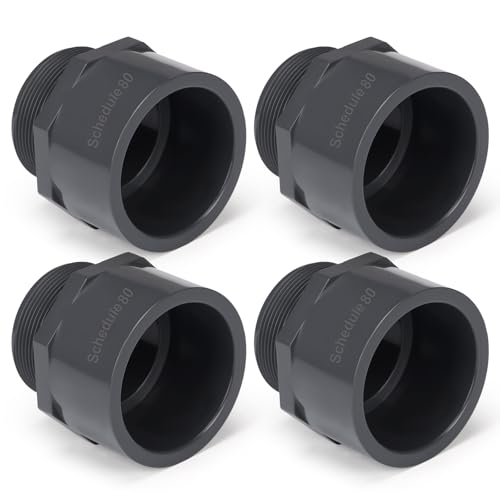
This heavy-duty PVC adapter set provides a reliable connect-to-pipe option with a 2-inch socket and 2-inch NPT male threaded end. It’s designed for high-pressure pipelines and corrosive environments where Schedule 80 components help reduce leakage risks. Best for quick assembly and flexible installation in chemical, wastewater, or industrial lines.
- Socket and NPT male threaded ends
- Corrosion-resistant PVC material
- Best for: fast, secure connections in high-pressure systems
Limitation: The set is a fitting accessory; ensure pipe compatibility with your system’s threading and socket dimensions.
Buying Guide
What is Schedule 80 and when should you choose it?
Schedule 80 features thicker walls than Schedule 40. It’s chosen for higher pressure, chemical resistance, and durability in industrial or outdoor environments. If your application involves high-pressure water or harsh media, Schedule 80 is typically preferred.
Which length should you buy?
Shorter lengths (18–24 inches) reduce weight and easier handling but increase the number of joints. Longer lengths (up to 84 inches) decrease joints but require more careful installation and support. Choose based on your layout, available supports, and the tolerance for fittings in your run.
What should you verify before buying?
- Compatibility with fittings (socket vs. threaded ends)
- Outer and inner diameters (OD/ID) to match your connectors
- Pressure rating and the chemical compatibility for the media being transported
- Local codes and installation standards for industrial piping systems
Material and environment considerations
PVC Schedule 80 is metal-free and corrosion-resistant, suitable for many chemicals and irrigation applications. However, it can become brittle in extreme cold or with improper handling. For outdoor uses, consider UV exposure and temperature effects in your planning.
How to install safely and efficiently
Use solvent cement and primer for socket joints, or compatible threaded fittings for NPT connections. Ensure clean pipe ends, proper alignment, and secure supports to prevent movement or sagging in longer runs. Follow local regulations for pressure testing and leak checks after installation.
Comparative snapshot
- Best for short, high-pressure runs: 18–24 inch Schedule 80 pipes
- Best for long runs with fewer joints: 36 inch and 84 inch options
- Best for versatile installations: fittings like adapters and socket-to-NPT options
FAQ
- What is the main difference between Schedule 80 and Schedule 40? The walls are thicker in Schedule 80, offering higher pressure capacity and greater durability.
- Can I use Schedule 80 PVC for chemical transport? Yes, PVC Schedule 80 is designed to resist many chemicals, but verify chemical compatibility with the product specs.
- Are there limitations on temperature? PVC pipes are generally best for moderate temperatures; check system requirements for extreme cold or heat.
- Is it okay to mix pipe schedules in one system? It’s possible but may require adapters and careful pressure considerations; avoid mismatches that affect flow and integrity.
- What installation tools are required? Primer, solvent cement, pipe cutters, reamers, and appropriate fittings are typically needed for solvent-weld connections.
- Where can I find more details on these specific products? Each product listing provides its dimensions, length options, and intended use scenarios.