Best 60 Roller Chains for Heavy-Duty Machinery
Choosing the right ANSI #60 roller chain is essential for conveying power in conveyors, lifts, and industrial equipment. This guide highlights five top options, spanning carbon steel, stainless steel, and heavy-duty variants, to help you pick a chain that maximizes durability and minimizes downtime. Each pick includes key specs, strength, and maintenance considerations to compare two common concerns: fatigue resistance and stretch over time.
Summary Table of Selected Products
| Product | Brand | Length | Material | Links |
|---|---|---|---|---|
| #60H Heavy Duty Roller Chain | PGN Bearings | 10 ft | Carbon Steel, Heavy Duty | 159 |
| #60 Roller Chain | PGN Bearings | 10 ft | Carbon Steel | 159 |
| #60SS Stainless Steel Roller Chain | PGN Bearings | 10 ft | Stainless Steel | 159 |
| Patioer #60 Roller Chain | Patioer | 10 ft | Carbon Steel | 2 free links |
| Jeremywell 60-2R Double Strand | Jeremywell | 10 ft | Carbon Steel | 1 link |
PGN #60H Heavy Duty Roller Chain

The ANSI chain No. #60H designation identifies a heavy-duty variant built for demanding applications. This 10-foot length includes 159 links and comes as a single-strand chain designed to handle high torque with robust pins, plates, and rollers. The heavier construction helps resist fatigue and deformation in continuous-running conveyors or lift systems where peak loads occur. When replacing an existing chain, verify compatibility with your sprocket pitch and anchor spacing to ensure proper engagement and reduced wear over time.
Key considerations:
- Single-strand construction simplifies replacement and alignment in standard conveyors.
- Heavy-duty design reduces stretch and maintenance intervals in high-torque setups.
- Ensure compatible sprockets and chain guides to maximize life span.
PGN #60 Roller Chain

This 10-foot carbon steel chain is a standard single-strand option with 159 links, designed for general-duty power transmission and conveying. Precision manufacturing helps balance wear resistance with smooth engagement on sprockets. The inclusion of two free connecting links (in some variants) simplifies installation and length adjustments during maintenance. For best results, pair with compatible sprockets and ensure lubrication suitable for your environment to extend service life.
Key considerations:
- Carbon steel construction offers good strength-to-weight balance for mid-range loads.
- Check compatibility with existing sprocket pitch and chain guides.
- Regular lubrication and inspection can curb elongation and noise during operation.
PGN #60 Stainless Steel Roller Chain

Designed for corrosion resistance in demanding environments, the #60SS stainless steel chain from PGN Bearings provides 159 links over a 10-foot length. Stainless construction offers extended life in moisture-prone settings or where exposure to chemicals is a factor. This single-strand chain maintains tight tolerances and smooth operation when paired with compatible stainless sprockets and guides. Regular inspection for any pitting or chrome wear helps preserve chain integrity over time.
Key considerations:
- Excellent corrosion resistance for outdoor or damp environments.
- Stainless material minimizes rust-related wear but may require different lubrication choices.
- Ensure compatibility with stainless sprockets to avoid accelerated wear at contact points.
Patioer #60 Roller Chain

Patioer offers a 10-foot carbon steel #60 chain with two free connecting links, a useful option for longer conveyors or elevated systems. The chain features a 0.750-inch pitch and a tensile strength around 8,500 pounds, with a weight around 1.005 pounds per foot. Heat-treated pins, plates, and rollers contribute to durability, while the design emphasizes reduced wear and stretch. This translates to improved uptime in high-torque conveyors and heavy machinery with demanding start-stop cycles.
Key considerations:
- Heat-treated components extend service life in tough environments.
- Low-stretch design reduces downtime needed for tension adjustments.
- Verify compatibility with your system’s sprockets and chain guides for best results.
Jeremywell 60-2R Double Strand
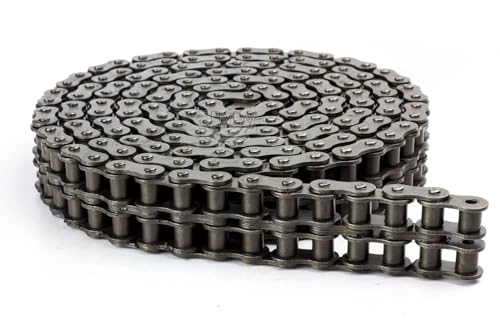
Jeremywell’s 60-2R double-strand chain is engineered for higher horsepower applications, offering a two-row configuration on a 10-foot length with 10 feet total, 1 connecting link included. With an average tensile strength of 17,000 pounds, this duplex chain is designed for heavy-duty conveyors and machines requiring higher load capacity. The product uses heat-treated components to improve durability and fatigue resistance, reducing wear in demanding service cycles. Before installation, confirm compatibility with dual-sprocket layouts and ensure precise alignment of both strands to avoid binding.
Key considerations:
- Double-strand design increases load capacity for high-torque applications.
- Higher tensile strength addresses demands of industrial conveyors and lifts.
- Proper alignment of both strands is essential to prevent uneven wear.
Buying Guide: 60 Roller Chain Purchase Considerations
When selecting a 60 roller chain, buyers should weigh materials, environment, load, and maintenance needs. The following perspectives help ensure a balanced decision:
- Material and environment: Stainless steel chains excel in corrosive or wet settings, while carbon steel offers strong performance in dry, industrial environments. For outdoor conveyors, consider protective coatings or stainless options to minimize rust.
- Strength and durability: Higher tensile strength supports heavy-duty applications, but compatibility with existing sprockets and guides is crucial. Heat-treated components shorten wear life and reduce stretch in high-torque cycles.
- Chain length and links: Ensure the total number of links and the need for connecting links match the system’s required length. Shorter chains are easier to replace, while longer chains can reduce splicing complexity in extended runs.
- Maintenance and lubrication: Regular lubrication reduces friction and wear, extending life. In dirty or dusty environments, sealed or stainless chains may reduce maintenance frequency.
- Installation and alignment: Proper tensioning and alignment minimize wear at pins and rollers. For duplex or double-strand configurations, synchrony between strands is essential to avoid binding and premature wear.
- Cost vs. downtime: Look beyond upfront price. Chains with longer service life and lower maintenance frequency can lower total cost of ownership by reducing downtime and replacements.
- Compatibility: Verify pitch, width, and sprocket compatibility with your existing hardware. Mismatch can cause accelerated wear or failure even with a strong chain.
Across these options, the choice hinges on the balance between corrosion resistance, load demands, and maintenance tolerance. For outdoor or moisture-prone environments, stainless and coated chains reduce rusting risk. For high-torque continuous operation, heavy-duty variants and duplex designs offer greater fatigue resistance. Always consult the equipment manufacturer’s specifications and perform test runs after installation to validate performance under actual operating conditions.