Best CNC Milling Machine Kit for Small Shops and Hobbyists
Buying a CNC milling machine kit can transform DIY projects into precise, repeatable productions. This guide highlights five well-rounded options suited for beginners to intermediate users, detailing who each is best for and why. Whether you’re engraving signs, prototyping PCBs, or crafting wooden decor, these kits cover a range of materials and work areas to fit tight desks or bigger workbenches.
The following summary table presents the chosen products, their ideal buyer profiles, and key strengths at a glance.
| Product | Best For | Key Strength |
|---|---|---|
| TTC3018 Pro CNC Router Machine | DIY hobbyists, classrooms, small makerspaces | All-metal Z-axis, high precision, wireless file transfer |
| Genmitsu 3018-PRO Router Kit GRBL | First CNC project builders, students | Grbl control, easy assembly, broad community support |
| SainSmart Genmitsu 3018-PROVer V2 | Beginners seeking upgrade paths | Pre-assembled parts, offline control option, easy setup |
| FoxAlien Masuter Pro | Users needing robust all-metal build | All-metal structure, configurable spindles, durable design |
| Genmitsu 3030-PROVer Ultra | Advanced hobbyists and small shops | Powerful spindle, high precision, dual rails, ball screws |
TTC3018 Pro CNC Router Machine

Best for: hobbyists and small classrooms needing a compact, all-metal build with reliable Z-axis mechanics. The upgraded metal Z-axis uses T8 lead screws for 0.1 mm positioning accuracy, reducing engraving shake and improving stability for wood, acrylic, MDF, and nylon projects.
Why selected: It offers higher rigidity and precision than many nylon-Z-axis models, and its 300 x 180 x 40 mm working area suits nameplates and small components. Wireless file transfer via 2.4G Wi‑Fi and multiple operation modes enhance workflow flexibility.
Limitations: The compact size may limit larger parts. Assembly may require following detailed setup steps for best accuracy compared with out-of-the-box fixed-position models.
Genmitsu 3018-PRO Router Kit GRBL

Best for: absolute beginners and students who want a straightforward GRBL-controlled machine with broad support resources. This kit emphasizes simple assembly and broad compatibility with various plastics, soft aluminum, wood, and PCB materials.
Why selected: The 3018-PRO provides a reliable, low-barrier entry into CNC milling with a robust ecosystem and easy learning curve. The upgraded base height improves stability, and it runs within a familiar open-source Grbl framework.
Limitations: Limited work area size may constrain larger pieces; expanding functionality often involves additional accessories or upgrades.
SainSmart Genmitsu 3018-PROVer V2

Best for: beginners who want an upgradeable platform with offline options. This version emphasizes ease of assembly and future expansion with accessories like offline control and extended spindle choices.
Why selected: It’s designed for a smoother learning curve with pre-assembled components and clear cable management. The offline control option allows operation without constant computer connection, boosting convenience for teaching labs or creative studios.
Caution: While beginner-friendly, more advanced applications may require additional upgrades or software learning to maximize capabilities.
FoxAlien Masuter Pro 3-Axis

Best for: makers needing a sturdy all-metal framework with reliable rigidity for detailed engraving on wood, acrylic, and nylon. It suits more ambitious hobby projects and classroom demonstrations requiring robust performance.
Why selected: The all-metal structure with a reinforced Z-axis and adjustable spindle clamps supports heavier materials and longer sessions. The design accommodates upgrade paths like a higher-power spindle for deeper cuts.
Caution: Some users might need to source compatible spindles and clamps separately and ensure proper wiring for upgrades.
Genmitsu 3030-PROVer Ultra
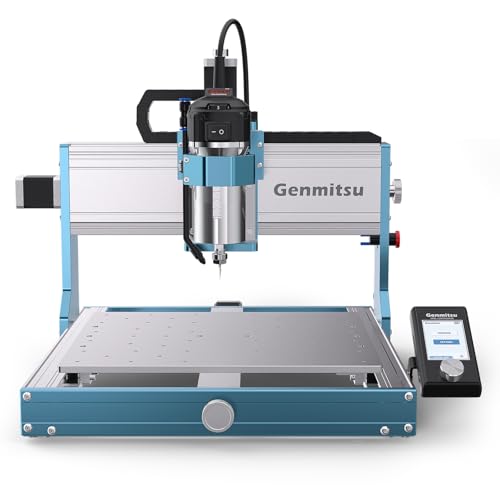
Best for: more serious hobbyists and small shops needing higher precision and rigid construction for aluminum and acrylic. The dual linear rails and ball screws support higher quality finishes and tighter tolerances.
Why selected: The 710 W spindle provides stronger cutting power, while the all-metal chassis and 1204 ball screws improve rigidity and precision to achieve consistent results on complex parts.
Limitations: The increased capability comes with a bigger footprint and potentially higher setup complexity compared to entry-level kits.
Buying Guide
What should you consider when choosing a CNC milling machine kit?
- Work area vs. desk space: Larger work areas enable bigger projects but require more bench space. Start with 300 x 180 mm if desk size is a concern, then consider expanding to 400 x 400 mm or more for bigger parts.
- Material compatibility: If you plan to work with wood, acrylic, PVC, and soft metals, ensure the spindle power and rigidity match your material choices.
- Control method: GRBL-based boards are common and have broad community support. Offline controllers offer operation without a constant computer connection, which is useful in classrooms or workshops without reliable USB access.
- Rigidity and durability: All-metal frames with robust Z-axis and linear rails improve precision and reduce shake during engraving and milling.
- Upgrade potential: Systems designed for easy upgrades (spindles, extra axes, or offline control) offer longer usefulness as your skills grow.
- Community and support: A strong user community helps with troubleshooting, project ideas, and software guidance, especially for beginners.
Frequently Asked Questions
What is the easiest CNC milling kit for a first-time user?
A kit with pre-assembled parts and clear setup instructions, such as the 3018-PROVer V2, tends to be friendlier for beginners.
Do I need offline control capability?
Offline control is helpful when a computer connection is unreliable or you want standalone operation via an SD card or built-in controller.
Is a larger working area better?
Not always. A larger area enables bigger projects but requires more workspace and can increase setup complexity. Start with a compact size if space is limited.
Can these machines mill metals?
Most small desktop kits are designed for woods, plastics, and soft metals. Heavier metals typically require more powerful spindles and rigid machines such as larger, dedicated metal routers.
What maintenance helps keep accuracy?
Regular checks of guide rails, spindle alignment, and tightening of screws, plus proper lubrication and dust management, help maintain precision.