Best Direct Part Marking 2D Scanners for Industrial Use in 2026
Direct Part Marking (DPM) scanners are specialized imaging devices built to reliably read etched, laser-etched, or otherwise permanently marked codes on metal, ceramic, and other challenging surfaces. This guide highlights five top options that balance rugged build, DPM decoding capability, and practical connectivity for industrial environments. The buyers who benefit most are manufacturing engineers, quality control teams, aerospace and automotive suppliers, and warehouse operators needing durable, long-life scanners. Below is a quick compatibility snapshot to help decide at a glance.
| Product | Best For | Why It Stands Out |
|---|---|---|
| Alacrity DPM Industrial Barcode Scanner | Rugged, flexible DPM reading | Direct Part Marking decoding on tough surfaces with wireless charging and long-range connectivity |
| Zebra DS3608-DP | Extreme durability | Ultra-rugged IP67, 8 ft drop protection, versatile DPM capture |
| Zebra DS3678-DP | Cordless convenience | Comprehensive DPM and barcode capture with Bluetooth and rugged build |
| Datalogic PowerScan PD9531 DPM | Industrial reliability | Rugged platform tailored for DPM and harsh environments |
| Eyoyo EYH2 | Budget-friendly wired option | Plug-and-play USB with broad 1D/2D support |
| Inateck BCST-72 | Wireless and long use | High-capacity battery and multi-mode connectivity for retail and factory floors |
Alacrity DPM Industrial Barcode Scanner
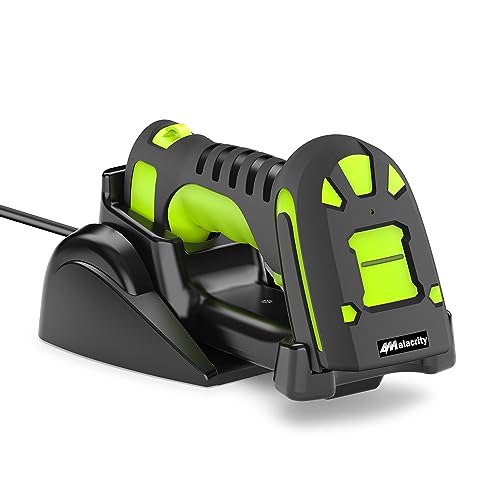
The Alacrity DPM scanner is designed to decode Direct Part Marking codes on challenging surfaces, including laser-etched or dot-peened marks. It supports 1D, 2D, and DPM symbologies, with wireless charging and robust wireless connectivity options (433MHz and Bluetooth). This model is best for manufacturers with rugged environments such as aerospace or automotive facilities, where permanent marks must be read reliably on metal and other hard substrates. A practical limitation is that performance can depend on surface glare and mark density, so plan for optimized lighting in high-glare areas.
Best for: Industrial facilities needing reliable DPM decoding on harsh surfaces with wireless flexibility and long-range connectivity.
Why selected: It combines DPM decoding with a durable form factor and modern wireless features, supporting manufacturing workflows where permanent markings must be read quickly and accurately.
Zebra DS3608-DP Direct Part Marking Ultra-Rugged

The Zebra DS3608-DP is built for extreme environments, with the highest durability specs in its class. It excels at capturing DPM data under adverse conditions and on various surface types—dot peen, laser etch, and ink marks included. It is designed to withstand 8 ft (2.4 m) drops, is IP67 weatherproof, and is capable of withstanding challenging temperatures. The limitation is that this model is best used in fixed or semi-fixed setups where its rugged hardware can be leveraged to its fullest; cordless flexibility is not its primary focus compared to newer modular kits.
Best for: Environments requiring the toughest protection and longest life in the field or factory floors.
Why selected: It represents the most rugged option for DPM scanning, ensuring operation in dust, water, and impact-heavy zones.
Zebra DS3678-DP Direct Part Marking Kit

The DS3678-DP offers cordless convenience with robust DPM and barcode reading capabilities. It supports laser etch, dot peen, chemical etch representation, and other DPM types while maintaining reliable performance on damaged or partially obscured barcodes. It includes a cradle and USB cable for easy integration into existing workstations. It’s best for facilities needing mobility paired with durable DPM recognition; the trade-off can be slightly heavier weight and a preference for occasional wired setups.
Best for: Teams needing cordless movement around manufacturing lines with strong DPM support.
Why selected: It delivers comprehensive DPM capture in a portable form factor, useful for areas where workers move between stations.
Caution: Cordless reliability depends on Bluetooth range and battery life in very cold environments.
Datalogic PowerScan PD9531 DPM Kit
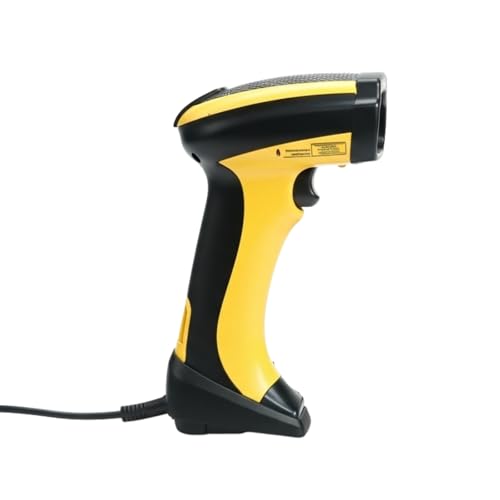
The Datalogic PowerScan PD9531-DPM kit targets industries requiring precise DPM recognition across abrasive surfaces. It emphasizes accurate code capture for aerospace, defense, and automotive use cases, helping track electronics, components, and metal parts. It suits environments with harsh conditions and high throughput demands. A potential limitation is that it emphasizes rugged reliability over ultra-lightweight portability.
Best for: High-precision DPM scanning in harsh industrial settings with strict traceability needs.
Why selected: It combines rugged performance with dependable decoding for challenging DPM marks.
Eyoyo EYH2 Handheld USB 2D Scanner

The Eyoyo EYH2 is a budget-friendly wired option that covers a wide range of common 1D and 2D barcodes, including QR codes and Data Matrix. It is designed for continuous usage with a long USB cable and plug-and-play setup, compatible with Windows, Mac, Android, and Linux. Best for small to medium operations, this model lacks some advanced DPM-specific features but delivers reliable general barcode scanning for retail and warehouse tasks. Limitation: It does not specialize in challenging DPM marks as the higher-end models do.
Best for: Budget-conscious facilities needing reliable wired scanning for standard barcodes and some DPM-compatible work.
Why selected: It provides a straightforward, cost-effective option for environments where DPM complexity is moderate.
Caution: May not perform optimally on highly challenging DPM surfaces compared to industrial-grade DPM scanners.
Inateck 2D Barcode Scanner BCST-72

The Inateck BCST-72 focuses on wireless scanning with a long battery life and includes AI app and SDK support for custom workflows. It supports standard 1D/2D barcodes, including QR codes and Data Matrix, and offers Bluetooth, 2.4G, and USB-C connectivity. This model is best for larger facilities with mobile scanning needs and integration into bespoke software solutions. A potential drawback is that real-world battery life varies with scanning density and screen-based codes.
Best for: Retail and manufacturing environments needing flexible wireless options and developer support.
Why selected: It balances multi-mode connectivity with developer-friendly tools for scalable deployments.
Buying Guide
What is Direct Part Marking (DPM) and why does it matter?
DPM uses permanent marks like laser etching or dot peen on parts. Reading these marks reliably is essential for traceability, quality control, and lifecycle tracking in aerospace, automotive, and electronics manufacturing. DPM readability can be affected by surface texture, glare, and mark density, so a scanner with robust decoding and lighting is crucial.
Key considerations when choosing a DPM scanner
- Ruggedness: Expect IP-rated seals and impact resistance for factory floors and outdoor sites.
- DPM decoding capability: Ensure the scanner handles laser etch, dot peen, chemical etch, and other common DPM marks.
- Connectivity: Wireless vs. wired, battery life, and compatibility with your existing systems (USB, Bluetooth, 2.4G, or 433MHz).
- Reading distance and field of view: Larger marks may require different optics or lighting; consider your most common marking scenarios.
- Ergonomics and form factor: Cordless models increase mobility; wired options reduce maintenance concerns.
- Software integration: Support for SDKs and compatibility with your ERP/WMS setup matters for seamless data capture.
How to compare models efficiently
- Start with DPM-readability tests using your real marks and surfaces.
- Check durability specs against your environment’s conditions (dust, water exposure, temperature).
- Balance price against the total cost of ownership, including battery replacements and maintenance.
- Assess ease of deployment and whether batch scanning is essential for your workflow.
FAQ
- What is Direct Part Marking (DPM) and why is it harder to read than printed barcodes? DPM uses marks etched or coated onto parts, which can have glare, low contrast, or non-flat surfaces that complicate imaging compared to flat printed codes.
- Which industries most benefit from DPM scanners? Aerospace, automotive, electronics manufacturing, and medical device production often rely on DPM for traceability and quality control.
- Is cordless scanning better than wired for DPM tasks? Cordless offers mobility, but wired can provide consistent performance and eliminates battery concerns in high-volume lines.
- Can a standard 2D scanner read DPM codes? Some can, but many DPM marks require specialized imaging and lighting to decode consistently, so a model with explicit DPM support is preferable.
- What should I consider for a long-term DPM solution? Look for durable construction, proven DPM decoding across mark types, easy integration, and scalable connectivity options.
- Do these scanners read non-DPM barcodes as well? Yes, most listed models handle standard 1D/2D barcodes in addition to DPM formats.