Best Fire Protection Gate Valves for Safeguarding Buildings
When selecting fire protection gate valves, buyers should prioritize durability, compatibility, and compliance with fire-safety standards. This guide highlights five electronics- and building-use ready options ideal for municipalities, facilities managers, and contractors seeking reliable water flow control in fire protection systems. Each choice is analyzed for best-use scenarios, connection types, and potential limitations to help you decide quickly and confidently.
| Product | Best For | Key Benefit |
|---|---|---|
| FireHoseDirect Red Aluminum 2 1/2in Fire Hydrant Gate Valve | Small-to-mid sized facilities, quick restore operations | Aluminum body, simple NH/NST connections |
| 4″ OS&Y Gate Valve, Flange x Groove, UL/FM | Industrial facilities with high-pressure fire protection needs | Ductile iron body, EPDM seal, AWWA C515 compliant |
| NIBCO Fig No T-104-O, 1 in. Bronze Gate Valve, Fire Protection | Smaller-dimension systems and retrofits | Outside screw & yoke, reliable bronze construction |
| Hicarer 2-1/2″ Fire Hydrant Gate Valve | Versatile connection scenarios, quick installs | Brass body, NST/NH compatibility, flow control safety |
| 2-1/2″ Mech OS&Y Gate Valve, Flange x Flange | Systems requiring visible valve positioning | OS&Y design, UL/FM approved, flange connections |
Notes: All products listed support standard fire protection workflows. The table above compares best-use cases and core strengths to help you shortlist quickly. Consider system pressure, connection type, and whether you need brass, bronze, or ductile iron components for your exact fire-safety environment.
FireHoseDirect Red Aluminum 2 1/2in Fire Hydrant Gate Valve

The FireHoseDirect model uses a 2 1/2 inch NH / NST female swivel pin lug inlet paired with a 2 1/2 inch NH / NST male outlet. This configuration is ideal for quick connections in smaller municipal and facility fire systems. It is best for buyers needing a compact, lightweight option with straightforward hose-thread compatibility and fast operation. Limitations include a potential mismatch with non-standard adapters in older networks, so verify inlet compatibility before installation.
4″ OS&Y Gate Valve, Flange x Groove, UL/FM
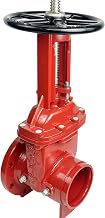
This valve features a ductile iron body (ASTM A536, grade 65-45-12) with EPDM rubber gaskets, designed for demanding fire protection and water distribution environments. It adheres to AWWA C515 standards, offering strong sealing and durability under high pressure. Best for large facilities or industrial settings requiring robust fire protection gear. A potential caveat is heavier weight and handling requirements during installation, compared to smaller valves.
NIBCO Fig No T-104-O, 1 in. Bronze Gate Valve

The NIBCO outside screw & yoke (OS&Y) bronze gate valve emphasizes visibility of valve position and long-term durability. It is well-suited for smaller fire protection lines and retrofit projects where precise manual control matters. Best for scenarios prioritizing clear status indication. Limitation: bronze construction can be pricier than other materials, and the 1-inch size may not cover high-flow needs in larger systems.
Hicarer 2-1/2″ Fire Hydrant Gate Valve

The Hicarer valve employs a brass body with a 2-1/2 inch NST connector, offering broad compatibility with standard hydrants and fire hose systems. It provides robust corrosion resistance and a slower opening/closing design to minimize water hammer. Best for quick installs in regions using NST/NH threads. Consider potential limits in extremely high-pressure environments where a heavier-duty option may be preferred.
2-1/2″ Mech OS&Y Gate Valve, Flange x Flange

This flange-to-flange OS&Y valve emphasizes visible position indicators, aiding maintenance checks and manual operation in critical fire protection lines. It is UL/FM approved and designed for straightforward integration into systems with flange connections. Best for projects requiring clear operation status and strong regulatory alignment. A limitation can be the need for compatible flanges and bolt patterns on existing piping.
Buying Guide
What should you look for when choosing fire protection gate valves?
- Connection type: Choose NST/NH, flange, or grooved connections based on your piping standard and ease of installation.
- Material: Brass and bronze offer corrosion resistance, while ductile iron provides strength for high-pressure systems. The right material depends on water chemistry and environmental exposure.
- Valve type: OS&Y valves provide visual indication of valve position, while standard gate valves prioritize flow control. Select based on maintenance and monitoring needs.
- Compliance: Ensure the valve meets relevant standards (AWWA C515, UL/FM approvals) for fire protection systems.
- Size and flow: Match valve size to your system’s required flow to avoid unnecessary pressure drop or flow restrictions.
Frequently Asked Questions
- What does OS&Y mean and why is it useful?
OS&Y stands for Outside Screw and Yoke, which provides a clear visual indication of whether the valve is open or closed, improving maintenance accuracy. - Which material is best for fire protection valves?
Brass and bronze offer excellent corrosion resistance and durability; ductile iron is strong for high-pressure environments. Material choice depends on water quality and system demands. - Are UL/FM approvals important?
Yes. UL/FM approvals indicate the valve meets recognized safety and performance standards for fire protection systems. - What connection type should I choose?
In flexible retrofit situations, NST/NH or threaded connections are common. Flanged connections work well for rigid, long-term installations. - How do I determine valve size?
Use your existing piping dimensions and system flow requirements. An undersized valve can restrict flow; an oversized valve adds cost without benefit. - Can these valves be used in potable water systems?
Some valves are designed for potable water compatibility; verify rubber gasket materials (such as EPDM) and system chemistry before use.