Best Full Trash Water Pump for Heavy-Duty Draining
When you need to move dirty or debris-filled water efficiently, a full-trash water pump is the right tool. This guide highlights five top options for American buyers, explaining who each pump suits best, and why they stand out. Ideal buyers include farmers, construction crews, homeowners dealing with basement flooding, and professionals who need reliable solids handling. The summary table below helps compare core strengths at a glance.
| Product | Best For | Why It Stands Out |
|---|---|---|
| VEVOR Gas Powered Water Pump | Remote sites, heavy lifting | Strong GPM, high-lift capability, no electricity required |
| Honda WT20 2-Inch Trash Pump | Professional job sites | Reliable Honda engine, solid solids handling, durable build |
| BILT HARD 2-Inch Pump | All-around construction drainage | Comprehensive fittings, EPA Phase III compliant |
| Tomahawk Power 3-Inch Pump | High-flow projects | Impressive flow with tough seals and robust construction |
| LARIDEN 3-Inch Diesel Pump | Farm and large outdoor drainage | Diesel power, high lift, durable aluminum body |
VEVOR Gas Powered Water Pump, 4 in

Best for remote sites and hillside irrigation, this 4-inch semi-trash pump delivers consistent flow under load. Its gas-powered engine eliminates reliance on electrical outlets, making it ideal for farms, construction sites, or emergency power outages. The cast iron impeller and heavy-duty frame support durable performance during long runs or high-intensity drainage. A high lift capability helps push water to elevated areas, which can save time and labor on sloped properties.
Who this is for: buyers needing a powerful, portable unit that works where power is unavailable. Why selected: strong flow (up to 422 GPM under load) and high head lift complement remote drainage tasks. Caution: running on fuel requires regular maintenance and fuel management; ensure safe storage and ventilation during operation.
Honda WT20 2-Inch Construction Trash Pump

Best for professional job sites requiring solid handling and durable construction. The Honda GX-series engine is known for reliable starts and steady power, while a large metal strainer allows up to 13/16″ solids. The heavy-duty frame, cast iron volute, and conical impeller help minimize wear. This model is well-suited for contractors draining muddy sites, construction basements, or debris-prone areas.
Who this is for: contractors and heavy-duty operators who value engine reliability and robust components. Why selected: easy starting and a pro-grade build. Caution: heavier than some compact units, which may affect portability in tight spaces.
BILT HARD Semi Trash Pump 2 Inch

Best for all-around drainage tasks on construction sites and properties with moderate debris. This 2-inch pump comes with a full set of fittings, including 50-foot discharge and 12-foot suction hoses, plus various adapters. The 7HP engine delivers up to 158 GPM, making it a practical choice for job-site groundwater, irrigation drainage, and pool emptying. Engine safeguards and EPA compliance add reliability for everyday use.
Who this is for: users who want a ready-to-connect package with extensive fittings. Why selected: comprehensive accessories reduce setup time. Caution: sealing tape recommended for hose connections to prevent leaks; verify hose compatibility before install.
TOMAHAWK 8 HP 3″ Industrial Duty
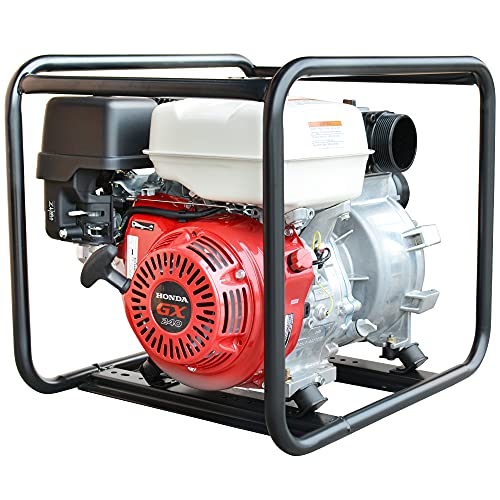
Best for high-flow applications, this 3-inch industrial trash pump delivers up to 22,500 gallons per hour (375 GPM). It features silicone carbide seals for enhanced durability and a chrome-plated volute for increased wear resistance. This unit suits large drainage tasks, ponds, and heavy stormwater scenarios where maximum throughput matters.
Who this is for: operators needing maximum flow and tough seals in harsh conditions. Why selected: high throughput and durable seals. Caution: appropriate maintenance is essential to preserve seal integrity over time.
LARIDEN 4-Stroke Diesel 3-Inch Pump

Best for farm or large outdoor drainage, this 3-inch diesel pump delivers impressive lift (85.3 ft) and high flow (up to 40 m³/h). The die-cast aluminum construction resists corrosion and wear, with a stable frame for outdoor operation. It is well-suited for ponds, irrigation drainage, and field projects where fuel availability is not tied to electric power.
Who this is for: rural farm work or large outdoor drainage where a diesel option is preferred. Why selected: strong lift and durable aluminum housing. Caution: diesel engines require fuel management and periodic maintenance for optimal performance.
Buying Guide
What to consider when choosing a full-trash water pump
- Flow rate and lift: Match GPM and vertical lift to your site’s drainage needs. Higher GPM is useful for rapid water removal; higher lift helps reach elevated outlets on slopes or hillsides.
- Solids handling capacity: Check the maximum solids size the pump can pass. For muddy water with debris, look for larger intake screens or cast-iron components and robust impellers.
- Engine type: Gas engines offer portability and independence from electrical power, while diesel engines excel in heavy-duty or remote site use. Electric submersible pumps are quiet and suitable for indoor or sump applications.
- Durability and materials: Cast iron components resist wear, while aluminum bodies reduce weight. Consider the environment and exposure to chemicals or saltwater.
- Hose and fitting options: Availability of complete fittings, hoses, and adapters affects setup speed and compatibility with existing systems.
- Starting reliability and maintenance: Models with proven engine lines (Honda, for example) tend to offer easier maintenance and longer life. Plan for routine oil changes and fuel system care for gas engines.
- Portability and wheel/handle design: For frequent transport between sites, prioritize lighter weights and ergonomic handles or wheels.
- Fuel availability and runtime: Larger tanks and efficient engines extend runtime away from power sources, but require storage considerations and safety practices.
FAQ
- What is the main difference between full-trash and semi-trash pumps?
Full-trash pumps can pass larger solids and debris, typically with more rugged construction, while semi-trash pumps handle moderate debris with lighter builds. - Can I use these pumps for indoor sump drainage?
Electric submersible models are often best for indoor use due to electrical safety, while gas models are ideal for outdoor or remote work. - Which engine type is best for a remote site with no power?
Gas or diesel engines are best; gas models provide portability, while diesel offers durability in demanding conditions. - How do I determine the right pump for hillside irrigation?
Consider lift capacity (head) and consistent flow under load; high-lift models prevent water from stalling as it reaches higher elevations. - Are replacement parts readily available for these pumps?
Well-known brands (Honda, Powerhorse) typically offer broader parts availability; verify parts compatibility with your model number. - What maintenance steps extend pump life?
Regular oil changes, fuel system care for gas engines, proper cooling, and cleaning the intake screen reduce wear and improve longevity.