Best Heat Resistant Insulation Material for Auto and Home Use
Looking for heat resistant insulation material that blocks radiant heat and reduces sound? This guide highlights five top options suited for automotive, workshop, and home applications. Each product is selected for its durability, heat resistance, and practicality. Use this overview to pick the insulation that best fits your project and budget.
| Product | Best For | Notes |
|---|---|---|
| ALLWIN Car Heat Sound Deadening Insulation Mat (40″ x 40″) | Automotive heat and noise reduction | Excellent radiant heat blocking; self-adhesive; waterproof |
| FLASLD Aluminized Heat Shield Mat (12″ x 24″) | High-temp heat shielding and protection | Reflects up to 95% of heat; durable aluminized surface |
| CHAOGANG 200mil 36.16 Sqft Car Sound Deadener | Large-area heat and sound dampening | Closed-cell PE foam with aluminum foil; wide coverage |
| Siless Liner 157 mil (4 mm) 36 sqft | Budget-friendly car thermal barrier | Oil and waterproof; adhesive-backed; high heat block |
| Cedolio Ceramic Fiber Blanket (24″ x 12″ x 1″) | High-temperature fireproof insulation | Rated to 2400°F; flexible and tear-resistant |
Note: The selected products vary in thickness, size, and intended use. For engine bays, trunks, or welding areas, choose thicker or higher-temp rated options. For indoor or window applications, consider reflective foils or bubble insulation to maximize reflectivity and reduce heat gain.
ALLWIN Car Heat Sound Deadening Insulation Mat (40″x40″)

Best For: Automotive enthusiasts seeking significant radiant heat reduction and sound dampening in engine bays, hoods, roofs, and trunks. This mat provides a 394 mil thickness and covers 10.8 sq ft, forming a dense barrier against heat transfer.
Why selected: It blocks up to 98% of radiant heat transfer and is self-adhesive for easy installation. The closed-cell foam is waterproof and odor-free, reducing moisture absorption and installation odor.
Caution: Larger sheets require careful cutting to fit irregular shapes; ensure proper surface cleaning for adhesive performance.
FLASLD Aluminized Heat Shield Mat 12″ X 24″ (Aluminized)”
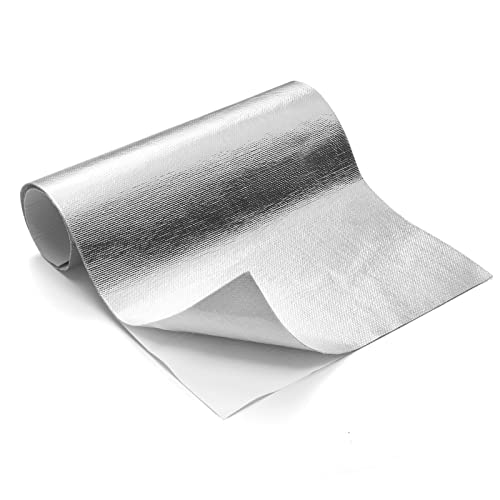
Best For: Projects needing extreme heat resistance, including high-temperature surfaces and reflective barriers. This mat uses aluminized finish with textured silica to withstand temperatures well above 2000°F and reflects up to 95% of radiant heat.
Why selected: The reflective surface helps protect underlying materials from UV and heat, making it suitable for automotive exhaust shielding or industrial applications.
Caution: Cut-to-fit and edge finishing are needed for curved shapes; requires careful handling to avoid tearing the foil layer.
CHAOGANG 200mil 36.16 Sqft Car Sound Deadener

Best For: Large automotive applications needing both heat insulation and vibration dampening. Thick 200 mil PE foam layered with aluminum foil delivers solid thermal barriers and acoustic benefits.
Why selected: The high-density foam is moisture-resistant and odor-free, offering durable performance across engine bays, hoods, and trunks.
Caution: Works best with flat or mildly curved surfaces; rounding or trimming may be required for complex contours.
Siless Liner 157 mil (4 mm) 36 sqft

Best For: Budget-conscious buyers needing a reliable heat barrier and sound deadener for cars, boats, or small workshops. The closed-cell foam with aluminum foil provides strong heat blocking with adhesive backing.
Why selected: This liner blocks 98% of radiant heat and is lightweight, waterproof, and easy to install, offering a cost-effective solution for multiple projects.
Caution: Adhesive may be affected by very high temperatures or long exposure; verify surface compatibility before application.
Cedolio Ceramic Fiber Blanket (24″ x 12″ x 1″)

Best For: High-heat environments such as ovens, stoves, kilns, and industrial equipment where fireproof insulation is essential. The blanket is rated up to 2400°F and retains shape after exposure to intense heat.
Why selected: Ceramic fiber blankets deliver exceptional heat resistance and flexibility for wrapping irregular shapes, making them suitable for fireproofing, linings, or blast barriers.
Caution: Handling should consider fiber irritation; follow safety guidance when cutting or shaping.
Buying Guide: Key Considerations For Heat Resistant Insulation
What is the intended environment? Choose products rated for the maximum temperature you expect. Automotive uses typically need moisture resistance and adhesive backing, while high-heat applications may require aluminized or ceramic fiber options.
What thickness is right?
Thicker materials generally offer better thermal blocking, but consider space constraints and weight. For engines and exhaust areas, thicker, multi-layer solutions often perform best.
Reflective vs. absorptive insulation
Reflective foils (aluminized finishes) reflect radiant heat, while foams and fibers absorb and dampen heat. Some projects benefit from a combination of both.
Adhesive backing and installation ease
Adhesive-backed sheets simplify installation on smooth surfaces. For irregular shapes, pre-cutting and trimming may be necessary. Surface preparation improves adhesion and longevity.
Moisture resistance and durability
Waterproof or moisture-resistant materials help prevent mold, odor, and degradation in damp environments. Closed-cell foams and aluminum foils tend to offer better moisture resistance.
Safety and handling
Some high-temperature insulation materials involve fibers or particles that require protective handling. Use appropriate gloves and masks as recommended by the product guidelines.
Frequently Asked Questions
- What is heat resistant insulation used for? It reduces radiant heat transfer, provides sound dampening, and protects surfaces from high temperatures in automotive, industrial, and home applications.
- Can I cut and fit insulation myself? Yes, many products are designed to be cut to size and shaped to fit contours. Use proper tools and follow safety instructions.
- Is reflective insulation better than foam insulation? Reflective insulation reflects radiant heat, while foam provides both barrier and dampening. For high radiant heat exposure, reflective layers are beneficial in combination with foam barriers.
- Will heat insulation affect my vehicle warranty? This varies by manufacturer and region. Always check vehicle-specific recommendations before installation in critical areas.
- How do I choose between ceramic fiber and PE foam insulation? Ceramic fiber handles extreme heat (up to thousands of degrees) and is ideal for fireproof or kiln-like environments. PE foam with aluminum foil is lighter, easier to install, and suitable for automotive heat and sound dampening.
- Are there safety considerations when installing insulation? Wear gloves and eye protection as needed. Ensure proper ventilation when cutting or handling materials that may irritate skin or lungs, and follow all product safety guidelines.