Best Hydraulic Loader Control Valves for Tractors and Loaders
Discover top hydraulic loader control valves that suit small tractors, loaders, log splitters, and related equipment. This guide highlights five well-rounded options, explaining who they’re best for, how they perform, and key considerations to help you choose. If you operate a compact tractor or construction setup, these valves can improve control, efficiency, and reliability. The buyer-friendly comparison below centers on installation ease, port configurations, and suitability for double-acting cylinders.
| Product | Spool Count | Flow (GPM) | Ports | Best For |
|---|---|---|---|---|
| GYZJ Hydraulic Flow Control Valve 2 Spool | 2 | 13 | G1/2″ | Compact tractors, loaders |
| HOOTO Hydraulic Valve 2 Spool | 2 | 11 | #8 BSPP in/out | Small tractors, loaders, log splitters |
| JAHEZYAN Hydraulic Control Valve with Float, 2 Spool | 2 | 11 | Log splitters, tractors loaders | |
| INPANOLS Hydraulic Control Valve with Joystick, 2 Spool | 2 | 11 | Log splitters, tractors loaders | |
| GYZJ Hydraulic Flow Control Valve 3 Spool | 3 | 11 | G1/2″ | Tractors, loaders, log diverters |
GYZJ 2 Spool Flow Control Valve, 13 GPM
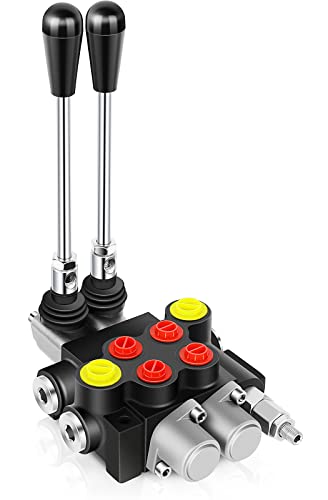
This 2-spool valve operates at up to 13 GPM and 3600 PSI, with G1/2″ inlet/outlet ports. It is designed for double-acting cylinders and features a spring-return mechanic to reset to neutral after use. Best for compact tractors and loaders needing robust control without a large footprint. Choose this if you require reliable spring-return with solid flow capacity. Caution: verify port sizes align with your existing hoses to avoid adapters that could introduce leaks.
HOOTO 2 Spool Directional Valve, 11GPM

This 2-spool unit features #8 BSPP in/out ports and is built from durable cast iron. It is suitable for small tractors, loader operations, and log splitters. It supports spring-return to neutral and provides reliable control for double-acting cylinders. Best for users needing strong construction and a straightforward install. Avoid this if your system requires larger porting or different thread standards.
JAHEZYAN 2 Spool, Float Function

This valve combines a dual-spool design with a float function to let the loader rest on neutral when the load is removed. It uses SAE thread configurations for compatibility with various hydraulic lines. Best for operators who need smooth load control and simple retraction without actively motorized input. Limitation: float mode can reduce controllability in tight, fast-moving operations.
INPANOLS 2 Spool, Joystick with Float

featuring a 2-spool setup with 11 GPM flow, this valve supports double-acting cylinders and includes a float function. Port sizes are SAE standard, enabling straightforward integration with existing hydraulic lines. Best for versatile installations that require both precise control and a neutral float when the load is released. Caution: ensure your system’s closed/open center configuration matches the valve’s design.
GYZJ 3 Spool Flow Control Valve, 11 GPM

This 3-spool configuration broadens control options for multi-function loaders, with a maximum 11 GPM flow and 3600 PSI rating. It uses G1/2″ ports and is designed for small tractors and loaders or log diverters. Best for setups requiring independent control of more hydraulic functions. Better for projects needing simultaneous cylinder operation; caution: more complex plumbing can increase installation effort.
JAHEZYAN 2 Spool with Float, 11GPM
This JAHEZYAN model integrates a float feature with two spools, offering reliable operation for loaders and log-splitting tasks. The float function helps maintain smooth control when unloading or setting a load down. Best for users who frequently switch between active lifting and float positioning. Limitation: double-check port sizing compatibility to avoid mismatches in existing lines.
Buying Guide: Key Considerations For Hydraulic Loader Valves
- Spool Count And Functionality — A two-spool valve provides independent control of two hydraulic circuits. A three-spool option adds a third function, which can be valuable for multi-tug operations but increases installation complexity.
- Flow Rate And Pressure — Ensure the valve’s maximum GPM and PSI align with your system’s requirements. Higher flow improves speed but may demand more robust hoses and fittings.
- Port Sizes And Thread Standards — Match the valve ports (such as SAE #8, #10, or BSPP standards) to your hoses and fittings. Incompatibilities can cause leaks or the need for adapters.
- Centering And Return Type — Spring-return valves automatically reset to neutral, which is convenient for everyday operation. Float functions allow the loader to rest when not actively lifting or dumping, beneficial for delicate loads but can reduce control precision during movement.
- Durability And Construction — Cast iron and other rugged materials support long-term use in harsh environments. Consider corrosion resistance and mounting compatibility with your equipment.
- Installation And Compatibility — Closed-center vs open-center configurations affect system compatibility. Confirm the valve fits your loader’s hydraulic circuit and does not require extensive modifications.
Frequently Asked Questions
- What is a hydraulic loader control valve? A valve that controls hydraulic flow to the loader’s cylinders, enabling lifting, lowering, and other motions.
- Do I need a float function? Float allows the load to rest without active input, reducing wear on the hydraulic system in material handling tasks.
- What port sizes should I look for? Common sizes include SAE #8 and SAE #10 for A/B/T/P ports. Verify compatibility with existing hoses and adapters.
- Is a 2-spool valve enough for a basic loader? Yes, for basic lift and curl functions; add a third spool if you need an extra function such as a grapple or auxiliary tool.
- What warranty or warranty-like assurances should I expect? Check vendor listings for any stated return policies or guarantees, and confirm installation requirements with a professional if needed.
- How do I avoid leaks after installation? Use appropriate thread sealant or Teflon tape rated for hydraulic use and tighten fittings to manufacturer specifications.