Best Industrial and Home-Use Computerized Sewing Machines for Heavy-Duty Projects
If you’re shopping for an industrial or high-capacity computerized sewing machine, you’re looking for reliability, power, and precise control. This guide highlights five top options that balance durability, features, and value for different buyers—from professional studios to serious hobbyists. Each machine is evaluated for who it’s best for, why it stands out, and any notable limitations to consider.
Summary table of selected products:
| Product | Best For | Why It Stands Out |
|---|---|---|
| VEVOR Industrial Sewing Machine, 550W | Professionals needing high-speed, heavy-denim capability | Powerful servo motor, up to 5000 spm, clear LCD control, energy-saving start/stop |
| Brother CS7000X Computerized Sewing and Quilting Machine | Home quilters and hobbyists with a wide stitch library | 70 stitches, included wide table and feet, easy needle threader |
| Brother XR9550 Sewing and Quilting Machine | Versatile quilters and garment makers | 165 stitches, wide table, robust accessory set |
| Brother CS5055 Computerized Sewing Machine | Beginner to intermediate sewers | 60 stitches, easy threading, solid feature set |
| SINGER Heavy Duty 6600C | Users needing strong performance with lots of stitch options | 100 stitches, ample power, metal frame |
VEVOR Industrial Sewing Machine With 550W Servo Motor

The VEVOR industrial sewing machine targets users who need heavy-duty performance with factory-grade control. It features a 550W servo motor that delivers strong feed and piercing power, capable of sewing materials up to about 0.4 inches (9 mm) thick, roughly 15 layers of denim. A maximum speed of 5000 stitches per minute ensures fast production without excessive vibration. The solid metal frame supports durability in demanding environments, while a clear LCD touchscreen makes it easy to adjust speed, direction, and needle position. A smart start/stop option helps save energy, and the needle remains in the down position when sewing stops, with the presser foot lifting automatically for precise fabric handling. Best for professional studios or operators who prioritize power and efficiency; avoid this if you mainly sew lightweight fabrics or require portable equipment. Caution: installation and maintenance may require more space and operator familiarity with industrial settings.
Brother CS7000X Computerized Sewing And Quilting Machine
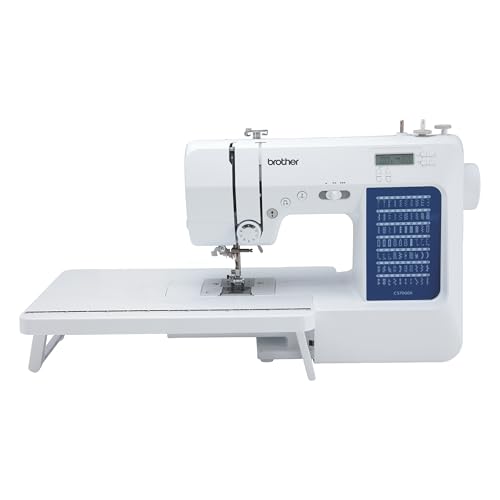
The Brother CS7000X is positioned for quilters and general-purpose sewers who want a broad stitch menu without an industrial footprint. It provides 70 built-in stitches, including utility, decorative, heirloom, and quilting stitches, plus 7 auto-size buttonholes. The automatic needle threader and jam-resistant drop-in top bobbin simplify setup, making it a good fit for beginners and intermediate users. The included wide table and 10 sewing feet expand creative options. Choose this if you want versatility and ease of use in a compact, home-friendly package.
Brother XR9550 Sewing And Quilting Machine

The XR9550 is designed for sewists who need a broad stitch repertoire and a reliable quilting setup. It offers 165 built-in stitches, including a mix of utility, decorative, and alphanumeric options, plus 8 auto-sized buttonhole styles. The automatic needle threader and drop-in top bobbin provide straightforward setup, and the wide table supports larger projects. This machine is best for users seeking a balance between capability and ease of use, especially for quilting and garment projects; avoid this if you need a steel-frame industrial machine or extremely thick fabric handling.
Brother CS5055 Computerized Sewing Machine

The CS5055 is a solid choice for beginners and casual sewists. It features 60 built-in stitches across utility, decorative, and heirloom categories, along with 7 auto-size buttonholes. The automatic needle threader and jam-resistant drop-in top bobbin simplify setup, while the included accessories provide a ready-to-start kit for basic to intermediate projects. Best for learners who want reliable performance at a comfortable price; avoid this if you require a large accessory kit or extensively thick fabrics.
SINGER Heavy Duty 6600C Computerized Sewing Machine

The SINGER Heavy Duty 6600C targets users who want a robust, feature-rich machine with a wide stitch library. It offers 100 built-in stitches across a diverse range of applications, including utility and decorative uses, plus 1100 stitches per minute. A metal frame supports durability for heaver fabrics while the included accessories cover most standard needs. Best for experienced hobbyists or small studios; choose this if you value a wide stitch repertoire and strong performance on thicker fabrics.
Buying Guide
What should you consider when choosing an industrial-leaning or computer-assisted sewing machine?
- Project Type: Determine whether your focus is heavy materials (denim, leather) or lightweight fabrics. Industrial machines excel with thick layers, while home-computerized models are ideal for quilting and fashion sewing.
- Motor Power and Speed: Look for a motor with enough horsepower and a speed that suits your workload. Higher speeds improve throughput but may require a steadier hand and better workspace.
- Stitch Library and Functions: A wide range of stitches supports versatility; auto-buttonholes and feed control can simplify complex patterns.
- Table Size and Workspace: A larger working surface helps with larger projects like quilts. Consider whether a wide table is included or needs to be purchased separately.
- Reliability and Maintenance: Metal frames and robust components help longevity; check for accessible support and availability of replacement parts.
- Ease of Use: Features such as automatic needle threading, jam-resistant bobbins, and intuitive LCD displays reduce setup time and errors.
- Portability vs. Stability: Industrial machines tend to be heavier but more stable during operation; home-use units prioritize portability and ease of setup.
Frequently Asked Questions
- What is the difference between industrial and household sewing machines?
Answer: Industrial machines typically feature higher torque, stronger frames, and faster speeds for heavy fabrics and long runs, while household machines prioritize versatility, ease of use, and portability. - Do computerized machines offer more stitches than mechanical ones?
Answer: Yes, computerized machines generally provide larger stitch libraries, automatic features, and programmable settings for precision. - Is a wider table important for quilting?
Answer: Yes, a wider working surface supports larger quilts and easier fabric handling during long seams. - Can beginners use heavy-duty machines?
Answer: Some heavy-duty machines are beginner-friendly, especially models with automatic threading and simple interfaces. - Are metal frames better than plastic?
Answer: In many cases, metal frames offer greater durability and stability under heavy workloads. - What should I consider about maintenance?
Answer: Regular lubrication, proper needle selection, and timely part replacement help maximize longevity and performance.