Best Industrial Epoxy Concrete Patch Solutions for Tough Repairs
Industrial-grade epoxy patch products deliver durable, fast-curing repairs for cracked, spalled, or worn concrete floors and structures. This guide highlights five options suited for heavy traffic, chemical exposure, and demanding environments. Whether you run a warehouse, garage, or manufacturing facility, these patches help restore strength and extend coating life. Each entry notes who it’s best for and why, plus practical considerations to help you choose confidently.
Selected products overview:
| Product | Best For | Why Pick It |
|---|---|---|
| ArmorPoxy Epoxy Mortar Patch Kit | Industrial floors, warehouses | High-strength, 100% solids epoxy that endures heavy traffic and provides a smooth, durable base for coatings. |
| BLACK STAR Perfect Patch | Walkways, ramps, outdoor surfaces | 100% epoxy strength, quick cure, excellent for high-traffic areas and forklifts. |
| TuffPatch CR 608 | Chemical-heavy environments | Ultra chemical resistance, bonds to damp concrete, cures in hours for fast return to service. |
| QuestMark 2125 Quick Setting Epoxy (Light Gray) | General industrial floors | Rapid setting, strong bond with concrete, versatile for cracks and pits. |
| ABATRON Abocrete Kit | Self-leveling repairs | Structural patching with very low odor, suitable for indoor applications and salt damage repairs. |
ArmorPoxy Epoxy Mortar Patch Kit

Best for: Industrial garages, warehouses, and heavy-use concrete floors that require a permanent, high-strength repair before applying floor coatings. The kit uses 100% solids epoxy mortar designed to withstand impacts and heavy traffic.
Why selected: This patch kit provides a durable, structural repair that offers excellent compressive strength and ready-to-coat surfaces after cure. Its industrial-grade resin resists wear and provides a solid foundation for subsequent coatings.
Limitations: Not ideal for applications requiring rapid cure in extremely small time windows; larger restorations may take longer to fully cure in cooler conditions. Ensure proper surface prep for best adhesion.
BLACK STAR Perfect Patch Concrete Repair Kits
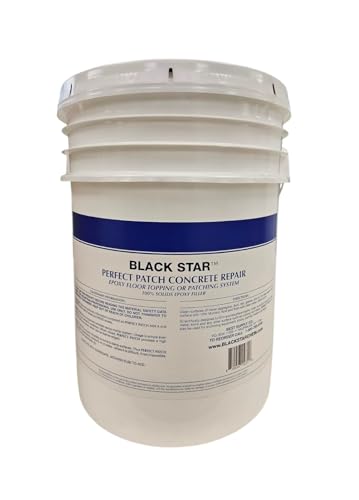
Best for: Outdoor walkways, stairs, and surfaces exposed to weather or forklift traffic, where quick return to service matters.
Why selected: The 100% epoxy formula restores concrete strength and supports heavy loads. It cures rapidly (4-6 hours set, 12 hours full traffic), reducing downtime and enabling faster project completion.
Limitations: While robust, very large fill volumes may require multiple pours; follow recommended thickness guidelines to prevent cracking during cure.
TuffPatch CR 608 Chemical Resistant Patch

Best for: Chemical-prone environments like battery rooms and containment areas where exposure to acids or solvents is a concern.
Why selected: This ultra-chemical-resistant Novolac epoxy patch handles harsh environments and returns to service quickly (about 4-5 hours at 75°F). It bonds to dry or damp concrete, enabling repairs even in challenging conditions.
Limitations: Requires precise mix ratios and proper ventilation due to chemical resistance properties; verify temperature guidelines for optimal cure.
QuestMark 2125 Quick Setting Epoxy (Light Gray)

Best for: Rapid repairs on industrial floors where downtime must be minimized and surfaces need a durable, long-lasting fix.
Why selected: Quick-setting epoxy provides a strong, permanent bond with concrete substrates, ideal for filling cracks, holes, and pits while maintaining structural integrity under heavy use.
Limitations: Light gray color may show staining more readily than darker patches; consider top-coating options to match surrounding floors.
ABATRON Abocrete Kit

Best for: Self-leveling repairs where a smooth, level surface is needed for subsequent coatings or traffic-ready floors.
Why selected: Abocrete combines structural patching with self-leveling properties and very low VOCs. It’s suitable for indoor applications and repairs salt-damage issues while keeping odor minimal.
Limitations: Self-leveling products require careful mixing and placement speed; work in small sections to maintain a level surface before cure begins.
Buying Guide: How To Choose The Right Epoxy Patch
What level of traffic will the repaired surface handle? For high-traffic industrial floors, choose products with high compressive strength and impact resistance, such as epoxy mortar patches or heavy-duty epoxy patches.
How chemical exposure affects the choice. In environments with acids, alkalis, or solvents, select chemical-resistant formulas (such as Novolac-based options) to prevent premature degradation.
Is surface moisture present? Some patches bond to damp concrete, while others require fully dry surfaces. If moisture is present, look for products explicitly rated for damp substrate bonding.
What cure time is acceptable for your operation? Quick-setting patches minimize downtime, but cure completion to full traffic readiness may still take hours. Plan repairs around your production schedule.
Color and finish. Light gray or dark gray patches may affect aesthetics when exposed areas are visible. Consider matching coatings or using near-color patches to reduce visibility.
Application method and tooling. Self-leveling formulations help create a smooth, uniform surface, but may require careful mixing and execution. Mortar patches often demand more filling and troweling effort but yield robust repairs.
Practical Buyer Considerations
- Surface type: indoor vs. outdoor exposure, and whether the patch must bear forklift traffic.
- Depth of damage: Shallow cracks vs. deep voids may necessitate different patch formulas or multi-step repairs.
- Coating compatibility: If you plan to coat the floor after patching, choose a patch that provides a good base for coatings.
- Ventilation and odor: Some products emit noticeable fumes; select low-odor options if working in occupied spaces.
Frequently Asked Questions
- What is the fastest patch cure time for industrial floors? Many fast-setting options reach initial handling in 4-6 hours and can be ready for light traffic in under 12 hours, depending on temperature and humidity.
- Can these patches be used outdoors? Several products are suitable for outdoor use, but check wind, temperature, and moisture considerations to ensure proper curing.
- Do patches require priming? Some products bond directly to concrete, while others may benefit from a compatible primer for optimal adhesion, especially on damp surfaces.
- Can patches be colored or coated after curing? Most epoxy patches accept coatings, sealants, or paints after the surface has cured according to manufacturer guidelines.
- Will patches fix structural damage or just surface-level issues? Epoxy patches can restore load-bearing capacity when the damage is appropriately addressed; deeper structural concerns may require professional assessment.
- Are low-VOC options available? Yes, some kits are GREENGUARD certified or designed with minimal odors and low VOC content for indoor use.