Best Long Arm Industrial Sewing Machines for Heavy Materials and Tubular Goods
When choosing a long arm or tubular-sewing machine, the goal is to handle larger projects and cylindrical items with precision. This guide highlights five solid options, each suited to different needs—from heavy denim and leather to shoes, bags, and quilts. Best for specialized tubular projects are the YEQIN long-arm cylinder model and the VEVOR industrial machine. For quilting and long-arm work, consider Juki and Grace machines. If portability with a longer arm is important, the CONSEW option offers practical mobility. The table below summarizes key points to compare at a glance.
| Product | Best For | Arm/Bed Type | Notable Benefit | Limitations |
|---|---|---|---|---|
| YEQIN 2973 Cylinder Long Arm Patcher | Tube-shaped items, shoes, boots, cylindrical packs | 460mm (18″) cylindrical arm | 360° rotating presser foot for sewing in any direction | Table diameter < 30mm requirement |
| VEVOR Industrial Sewing Machine | Heavy-duty upholstery and thick fabrics | Industrial table with servo motor | High speed up to 5000 SPM, clear LCD controls | May require setup for first-time users |
| Juki HZL-NX7 Long Arm Quilting | Heavy fabrics and multiple layers | Long arm, quilting-capable | Automatic needle threader and advanced threading | Optimal for quilting; basic table setup may vary |
| The Grace 16X Elite Longarm | Large quilts and long-work sessions | 8 ft frame with 16″ throat | Ergonomic controls and bright throat light | Higher investment and dedicated space |
| Consew CP206RL Portable Walking Foot | On-the-go projects with a longer arm | Longer arm, walking foot | Portable power with built-in motor | Limited features compared to fixed industrial models |
YEQIN 2973 Cylinder Long Arm Patcher Sewing Machine

The YEQIN long-arm cylinder model is designed for cylindrical items such as shoes, boots, lampshades, and other tubular goods. It features an 18-inch arm extension (460mm) to reach into tubular shapes. The machine supports cylindrical bed sewing and rotating directions with a 360-degree presser foot. Best for crafters or small workshops focusing on footwear and cylindrical fabric repairs. A caution: the table diameter must be less than 30mm for optimal operation, which may require compatible work surfaces.
Who it’s best for: small shoe repair shops, cobblers, and leather crafters who frequently stitch cylindrical items. Why chosen: its extended cylindrical arm and rotating presser foot provide flexibility for tubular shapes. Caution: ensure your work surface meets the sub-30mm table diameter requirement.
VEVOR Industrial Sewing Machine

VEVOR’s industrial sewing machine brings a robust 550W servo motor for strong feeding and piercing power. It can handle material thicknesses around 0.4 inches (9 mm, approximately 15 layers of denim) at up to 5,000 stitches per minute, with reduced vibration and noise. The LCD touchscreen provides intuitive control for speed, direction, needle position, and other settings. Best for upholstery, leather, and heavy fabrics where speed and durability matter. Limitation: advanced features and setup may require a focused initial learning curve for new users.
Who it’s best for: upholstery shops and fabric studios needing fast, consistent stitching on thick materials. Why chosen: high speed, servo control, and a clear display streamline complex projects. Caution: the control panel and adjustments may demand time to master for beginners.
Juki HZL-NX7 Next Generation Long Arm

The Juki HZL-NX7 focuses on advanced threading and heavy-fabric handling. It features an automatic needle threader and a long arm suitable for quilting and multi-layer projects. This model emphasizes precise stitching and reliable operation when pressing across thick layers. Best for quilters and garment makers working with heavy fabrics. Limitation: setup may require table and motor assembly, and some users may need to learn Juki’s threading and feed options for optimal results.
Who it’s best for: quilters and garment sewers needing automatic threading and stable performance under heavy fabric loads. Why chosen: automatic needle threading and a long-arm configuration support complex, multi-layer sewing. Caution: assembly and table setup may be involved before use.
Grace 16X Elite Longarm Quilting Machine
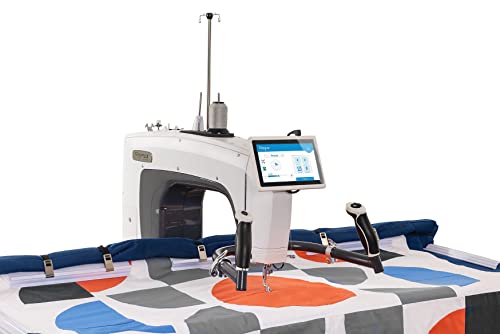
The Grace 16X Elite Longarm pairs a roomy 16-inch throat space with an 8-foot frame, designed for large quilt projects and extended quilting sessions. Ergonomic handles and a 7-inch touch screen simplify operation, while bright throat lighting helps with precision. Best for serious quilters who value comfort during long sessions. Limitation: larger footprint and higher investment may be a constraint for hobbyists.
Who it’s best for: professional quilters and dedicated hobbyists seeking comfort and control over large quilts. Why chosen: long throat space, ergonomic design, and intuitive controls streamline big projects. Caution: requires dedicated space and may be less flexible for smaller, frequent projects.
SINGER Heavy Duty 4411

The SINGER 4411 offers high-speed stitching with up to 1,100 stitches per minute and 50% more power for heavy fabrics like denim, canvas, and leather. It provides 69 stitch options for versatile sewing tasks. Best for projects requiring speed and durability in a home or small shop. Limitation: not a true long-arm or tubular-specific machine; best for flat work on larger fabric panels.
Who it’s best for: general sewers and remodelers needing stronger performance on tough fabrics. Why chosen: strong motor, high speed, and diverse stitch options. Caution: less ideal for tubular or cylindrical applications compared to long-arm cylinder machines.
Consew CP206RL Portable Walking Foot

The CP206RL is a portable walking foot machine with a longer arm and a built-in motor. It emphasizes portability and the ability to take sewing power to different work sites. Best for on-site repairs and projects requiring mobility. Limitation: may lack some high-end features of full industrial long-arm models.
Who it’s best for: makers who need a portable solution with extra arm length for tubular or large projects. Why chosen: portability and extended reach make it suitable for field tasks. Caution: may not offer the full feature set of larger, fixed industrial machines.
Buying Guide: How To Choose A Long Arm Industrial Sewing Machine
What kind of projects will you be stitching?
Match the machine to your primary use. Tubular or cylindrical items benefit from a long-arm cylinder bed (like the YEQIN). Quilting and multi-layer fabrics benefit from long-arm quilting machines (such as the Juki HZL-NX7 or Grace 16X Elite). Heavy fabrics demand robust power and speed (VEVOR or SINGER 4411). For mobility, consider portable options like the Consew CP206RL.
Arm length and bed type matter
A longer arm provides room for larger projects. A cylindrical arm improves stitching on tubes, boots, or bags. Consider whether you need a fixed frame or a portable setup.
Power, speed, and control
Servo motors offer precise control and energy efficiency. Speed (stitches per minute) affects productivity and fabric handling. A clear control panel or LCD helps with quick adjustments during projects.
Ease of use and setup
Automatic threading, needle positioning, and up/down needle control simplify complex tasks. Consider whether assembly is required and if the workspace can accommodate the machine’s footprint.
Durability and maintenance
Metal frames and robust components reduce vibration and extend life. Check for available service and replacement parts in your region.
Budget and space considerations
Long-arm machines range in price and footprint. A larger, dedicated studio supports longer sessions, while portable options fit smaller spaces or on-site work.
What about warranty and support?
Official dealers often provide warranty coverage and parts support. Confirm what is included and the estimated lead times for service in your area.
FAQ
- What is the main advantage of a long-arm cylinder machine? It enables stitching along tubular shapes like boots, shoes, and bags with a cylindrical bed for better control.
- Which machine is best for heavy denim and leather? Machines with high torque, servo motors, and robust frames, such as the VEVOR or SINGER Heavy Duty 4411, are well-suited for thick fabrics.
- Is automatic needle threading important? Yes, it reduces setup time and improves accuracy when working with heavy fabrics or multiple layers.
- Should I choose a portable option or a fixed long-arm? If you need mobility for on-site repairs, a portable option like Consew CP206RL is useful; for dedicated quilting or upholstery, a fixed long-arm offers more stability and features.
- Do these machines require assembly? Some models arrive unassembled or in multiple boxes; verify the supplier’s packaging and included components before purchase.
- What should I check before buying? Arm length, bed type, motor power, stitching speed, adjustability, and available accessories or table compatibility.