Best Low Profile Pallet Jacks for Easy Warehouse Handling
Choosing a low profile pallet jack can streamline loading and unloading in tight spaces. This guide highlights five top options, focusing on low entry heights, maneuverability, and built-in features like scales for on-the-go weighing. Read on to compare options that fit narrow aisles, tight docks, and busy warehouses.
Summary of Selected Products
| Product | Brand | Key Feature | Estimated Capacity |
|---|---|---|---|
| DoubleWin Low Profile Pallet Jack | DoubleWin | Minimum fork height 2″, 27 x 48 forks | 4400 lb |
| SellEton SL-5000-E-Narrow Pallet Jack Scale | SELLETON.COM | Built-in scale, narrow entry for tight spaces | 5000 lb |
| PEC Industrial Pallet Jack with Built-in Scale | PEC | Integrated scale, low 2.9″ profile | 5000 lb |
| Vestil PM4-2096 Steel Low Profile Pallet Truck | Vestil | Ergonomic handle, strong maneuverability | 4000 lb |
| Jack Boss 3 Ton Low Profile Floor Jack | Jack Boss | Low profile with dual pistons | 3000 lb |
DoubleWin Low Profile Pallet Jack

The DoubleWin pallet jack offers a 4400 lb capacity with a noticeably low fork height. The minimum fork height of 2 inches enables easy entry into many pallet types, and raised height is 5.6 inches for stacking clearance. Its 27 by 48 inch forks provide ample support for standard pallets, making it a practical option for freight handling in warehouses, workshops, and stores with limited dock space. The low-profile design helps users slide beneath pallets with minimal effort, reducing strain during repetitive maneuvering. The unit is suited for loading, unloading, and general palletized goods handling in tight environments.
SellEton SL-5000-E-Narrow Pallet Jack Scale

This model combines a pallet jack with a built-in scale, designed for mobile weighing. It is a narrow-profile solution that fits tighter aisles while offering the capacity to weigh loads as you move them. The scale system supports multiple weighing units and hold functions, delivering a flexible approach for inventory and shipping tasks. The unit emphasizes durability and ergonomic steering to handle demanding warehouse tasks in both indoor and outdoor settings. It is well-suited for operations requiring quick weight data without transferring pallets to a separate scale.
PEC Industrial Pallet Jack With Built-In Scale

PEC’s pallet jack integrates a scale to streamline workflow and improve accuracy. The unit features a very low 2.9″ profile with tapered forks to ease pallet entry, and a single-wheel design that helps prevent jamming or pallet damage compared with dual-wheeled designs. This combination makes it a solid choice for warehouses that require on-the-fly weighing while moving pallets. Durability and accuracy are emphasized to support continuous use in high-volume environments.
Vestil PM4-2096 Steel Low Profile Pallet Truck

The Vestil low-profile pallet truck emphasizes ergonomic handle height and strong maneuverability when fully loaded. It’s built for harsh warehouse environments where easy steering and reliable lifting are essential. The design focuses on robust forks and a compact profile, enabling smooth entry under pallets and confident handling of heavy loads in narrow lanes. This option suits facilities seeking a durable and straightforward solution for routine pallet movement without extra features like built-in scales.
Jack Boss 3 Ton Low Profile Floor Jack
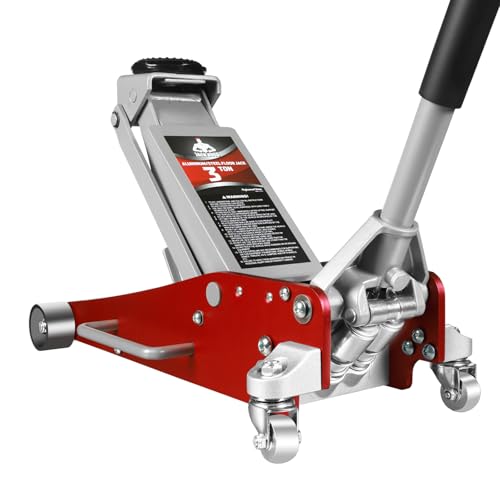
Note: The Jack Boss model is a low-profile floor jack with a 3-ton rating, primarily designed for automotive use rather than pallet handling. While it shares the characteristic of a low entry height, it is intended for lifting vehicles rather than moving pallets. If your primary need is pallet handling, this option is less relevant than dedicated pallet jacks, but it demonstrates the broader category’s focus on low-profile design and quick lift capability for other tasks.
Buying Guide
Key considerations for selecting a low profile pallet jack include:
- Capacity and pallet fit: Ensure the jack supports your typical load and that the forks match your pallet dimensions (width, length, and entry profile).
- Fork height: A lower minimum fork height helps with easier pallet entry; verify both minimum and raised heights for your use cases.
- Low-profile design vs. built-in scales: If weighing loads on the fly is essential, consider a pallet jack with an integrated scale. For high-precision weighing, review the scale’s accuracy and unit options (lb/kg).
- Aisle and dock compatibility: Narrow or cramped spaces benefit from jack width, wheel design, and maneuverability. A single-wheel design can reduce pallet damage in tight lanes.
- Durability and materials: Look for steel frames, reinforced forks, and corrosion-resistant components for longevity in busy warehouses.
- Ergonomics and operation: Ergonomic handles, smooth steering, and effortless lifting mechanisms reduce operator fatigue during long shifts.
- Maintenance and serviceability: Check for readily available replacement parts, wheel replacements, and ease of service to minimize downtime.
For facilities that require precise on-site weighing, pallet jacks with built-in scales can boost efficiency and accuracy. For others prioritizing pure pallet movement, a low-profile, robust jack with durable forks and a compact profile may offer better value. When selecting among these options, map your typical pallets, aisle widths, and docking configurations to identify the best balance of height, capacity, and maneuverability.