Best Mobile Dust Extraction Units for Job Sites
Find the right mobile dust extraction unit to keep your workspace clean and compliant. This guide highlights five top options, explaining who each model is best for and why it fits common industrial, woodworking, and DIY needs. Whether you’re sanding, grinding, or finishing, these units help manage dust at the source. Choose based on airflow (CFM), filtration, tool activation, and mobility to match your setup and workflow.
| Product | Best For | Key Benefit |
|---|---|---|
| Bosch VAC090AH | Contractors and grinders | Auto tool activation with OSHA-friendly dust systems |
| WEN DC1300 | Large shops | High CFM with dual tool inlets |
| ECOMAX Shop Vac | Woodworking and garages | Versatile dual-mode operation with PTA |
| Dapper Supply Dust Extractor | Drywall and heavy dust | Automatic start with tools and strong suction |
| 500W Benchtop Dust Collector | Labs and jewelry work | Low-noise, high-suction compact unit |
Bosch VAC090AH 9 Gallon Dust Extractor
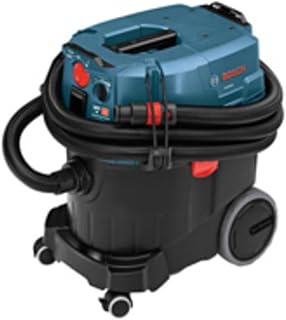
The Bosch VAC090AH is designed for use with power tools. It delivers up to 150 CFM with a static water lift around 97 inches. It supports tool activation to turn the vacuum on and off with the tool, and the Power Broker dial tunes suction to the application. Best for contractors and grinders needing integrated dust control that aligns with silica compliance. A limitation is that data emphasizes compatibility features over standalone high-volume use.
WEN DC1300 1,300 CFM Dust Collector

This unit offers high airflow (up to 1,300 CFM) and two 4-inch inlets, enabling dual-tool operation. The 50-gallon bag provides ample collection capacity for extended use. Best for medium-to-large shops needing robust dust control with flexibility to run multiple tools. Caution: setup and space requirements are larger than compact benchtop models.
ECOMAX Shop Vac with HEPA Filter

The ECOMAX model blends standard vacuum mode with a dedicated dust extractor mode for woodworking. It includes a PTA feature that starts automatically with compatible tools and a semi-automatic filter cleaning cycle. Best for woodshop environments seeking automatic operation and a HEPA filter. Limitation: performance emphasis is on versatility rather than maximum airflow alone.
Dapper Supply Auto-Start Dust Extractor

This 10-gallon unit delivers 151 CFM with a 23 kPa suction rating and automatic tool start for power tools. Useful for drywall and general dust control on busy jobsites. A potential drawback is its 10-gallon capacity, which may require more frequent emptying in high-dust tasks.
500W Industrial Benchtop Dust Collector

This compact benchtop unit provides high-suction with a 500W motor and quiet operation under 60 dB. It is well-suited for jewelry polishing, crafts, and precision grinding at a workstation. Best for small tasks with low noise requirements. Limitation: it has lower overall volume compared to larger shop vacs.
Buying Guide
What should you consider when choosing a mobile dust extraction unit?
- Airflow and filtration: Prioritize CFM and a capable filter (HEPA if you handle fine dust) to capture particles at the source.
- Tool activation features: If you frequently use power tools, a PTA-enabled unit reduces cleanup steps by turning on with the tool.
- Mobility and capacity: Larger shops benefit from higher capacity bags or cans and sturdy wheels; smaller spaces favor compact, lightweight models.
- Noise and durability: Look for models designed for low noise operation and robust construction for long-term use in workshops.
- Compatibility with tasks: Match the model to your typical dust type (wood, drywall, metal) and ensure proper filtration for silica and fine particulates.
FAQ
- What is CFM and why does it matter?
CFM measures airflow; higher CFM can move more dust, improving capture at the source. - Do I need PTA (power tool activation)?
PTA helps automate dust collection, reducing manual start/stop and improving dust control during tool use. - Should I choose a HEPA filter?
HEPA filters capture smaller particles and are advisable for fine dust and silica-prone tasks. - Is a larger tank better?
Larger tanks reduce the frequency of emptying but can reduce mobility; balance with workspace size. - Can these units handle wet and dry dust?
Some models support wet/dry collection, but verify specifications for the intended debris type. - What about noise levels?
Look for models specified under 60 dB for quiet operation in sensitive environments.