Best Motor-Driven Water Pumps for Home, Workshop, and RV Use
Whether you need to move water for irrigation, transfer liquids, or pressurize a system, motor-driven water pumps offer reliable, powered performance. This guide spotlights five compatible options, outlining why each is best for certain buyers and scenarios. The table below compares core strengths to help you choose quickly.
| Product | Best For | Key Advantage |
|---|---|---|
| Hypro 9303C Cast Iron Hydraulic Motor-Driven Pump | Industrial tasks and heavy-duty transfer | Durable cast iron build and hydraulic drive |
| ECO-WORTHY 33-Series 110V AC Diaphragm Pump | RV and home irrigation with automatic pressure control | Smart pressure switch and auto on/off |
| Milescraft 1314 Drill Pump | DIY water transfer with a drill | Self-priming, garden hose compatibility |
| FMC-150-HYD-206 Hydraulic Driven Centrifugal Pump | Open-center hydraulic systems | Mounting versatility and high-pressure potential |
| VEVOR 12V Water Transfer Pump | Portable outdoor water moves | 12V power, compact, and durable |
Hypro 9303C Cast Iron Hydraulic Pump

The Hypro 9303C is a cast-iron hydraulic motor-driven pump designed for demanding tasks. Best for industrial users who require robust construction and reliable hydraulic performance in open or pressured systems. The heavy-duty materials provide durability in tough environments, making it suitable for irrigation setups, agricultural transfers, and workshop fluid movement.
Why chosen: Its cast iron build offers long life in rugged settings, and a hydraulic drive allows consistent flow under load. Caution: This pump relies on a compatible hydraulic source, so ensure your system can supply the necessary hydraulic pressure and flow.
ECO-WORTHY 33-Series 110V AC Diaphragm Pump

This diaphragm pump runs on 110V AC and delivers about 4.0 GPM at 50 PSI. It is ideal for RV water systems and garden irrigation where an auto on/off pressure switch is beneficial. It’s quiet and maintains pressure by automatically turning off when faucets close, then resumes when opened.
Why chosen: The smart pressure switch provides automatic regulation, reducing manual intervention. Caution: It requires a stable 110V supply; use where electrical access is reliable. Also, the adjustable 45–70 PSI range helps tailor flow to different fixtures.
Milescraft 1314 Drill Pump 750
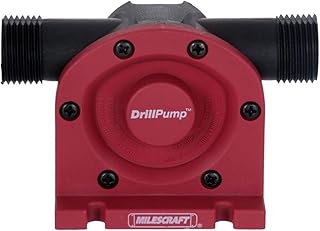
The Milescraft 1314 Drill Pump attaches to a drill to create a portable water transfer pump. Best for DIY users who need a simple, low-cost method to move water or liquids using standard garden hoses. It pumps up to 750 GPH and is easy to deploy in small-scale tasks.
Why chosen: Self-priming capability and standard hose compatibility give versatility for quick transfers. Caution: Performance depends on drill speed and control; it’s less suitable for continuous or high-volume pumping.
FMC-150-HYD-206 Hydraulic Driven Centrifugal Pump

The FMC-150-HYD-206 is a hydraulic-driven centrifugal pump suited for open-center hydraulic systems. It emphasizes mounting versatility and the ability to produce higher pressures compared to PTO or belt-driven options. It features simplified maintenance with separate pump and hydraulic motor shafts.
Why chosen: Choose this if your system benefits from flexible mounting and higher pressure. Caution: Requires a dedicated hydraulic circuit and proper integration to avoid overpressure or misalignment.
VEVOR 12V Water Transfer Pump

The VEVOR 12V pump is a compact, portable option for on-the-go water moves. Powered by a 12V battery, it handles about 360 GPH and can lift water up to 46 feet. Best for outdoor tasks, temporary setups, and places without mains power access.
Why chosen: The 12V design enables mobility and quick setup. Caution: Not ideal for prolonged heavy-duty pumping; battery life and connector integrity should be considered in remote locations.
Buying Guide: Key Considerations for Motor-Driven Water Pumps
Choosing the right motor-driven water pump depends on your application, power source, and fluid handling needs. Consider flow rate, head height, power supply, mounting, and maintenance. Below are practical questions to guide your decision.
What flow rate do I need?
Determine the needed gallons per minute (GPM) for your tasks. Higher GPM is useful for irrigation or rapid transfers, while lower rates may suffice for pressurized systems or delicate liquids.
Is a hydraulic, belt-driven, or electric pump best?
Hydraulic-driven pumps excel in systems with powered hydraulic motors and require compatible hydraulics. Electric pumps are convenient for fixed wiring in homes or RVs. Drills or battery-powered options suit DIY, portable tasks.
Do I need auto-pressure control?
Auto on/off pressure switches simplify operation by maintaining a chosen pressure range and reducing manual intervention. This is especially helpful for home, RV, and garden setups.
What mounting and space considerations exist?
Mounting versatility matters for installation in tight spaces or open-center hydraulic systems. Ensure the pump location supports available space, vibration requirements, and accessibility for maintenance.
What maintenance is required?
Look for pumps with simple shaft seals, accessible wear parts, and straightforward lubrication. Maintenance-friendly designs reduce downtime and extend service life.
What safety considerations apply?
Check for thermal protection, overload protection, and electrical safety for 110V options. Ensure compatibility with system pressure ratings to prevent overpressure hazards.
Frequently Asked Questions
- What is a motor-driven water pump? A device that uses an electric, hydraulic, or mechanical motor to move water from one place to another, often with a defined flow rate and pressure.
- Which pump is best for RV use? Pumps with automatic pressure control and quiet operation are ideal for RV water systems. The 110V diaphragm pump is a common RV choice for consistent water pressure.
- Can these pumps handle hot water? Some diaphragm and centrifugal pumps tolerate moderate temperatures, but check specifications for maximum temperature and material compatibility.
- Do I need a pressure switch? If you want automatic on/off cycling based on faucet use, a pressure switch is beneficial and common in home and RV setups.
- Is a hydraulic-driven pump better than a belt-driven one? Hydraulic-driven models can provide higher pressures and flexible mounting, but require a suitable hydraulic source and system design.
- How do I avoid pump cavitation? Ensure adequate lift, proper priming, and avoid running the pump dry. Matching the intake height and staying within the pump’s recommended head range helps.