Best Multiprocess AC/DC Welders for Home Shops and Small Pro Jobs
Looking for a multiprocess AC/DC welder that blends TIG, Stick, and other modes in one unit? This guide highlights five capable models, suitable for hobbyists, DIYers, and small fabrication shops. Each option balances versatility with practical limitations, helping you pick the right fit for aluminum, stainless steel, copper, and thin metals. The top picks emphasize portability, user-friendly controls, and reliable arc starts, so you can weld with confidence on a variety of projects.
| Product | Best For | Key Benefit |
|---|---|---|
| ARCCAPTAIN TIG Welder AC/DC 200Amp | Aluminum, non-ferrous metals | 7-in-1 versatility with Square and Triangular Waveforms |
| Weldpro 200A AC/DC TIG Welder | Precision aluminum and mixed metals | 5-in-1 with dual voltage and HF start |
| PUWU 205Amp AC/DC Aluminum TIG Welder | Fabrication and repair | Nine waveforms and wide material range |
| YESWELDER 200A AC/DC TIG Welder | Beginner to intermediate users | Large LED display and Auto Memory for easy setup |
| TOOLIOM 200A AC/DC TIG Welder | All-around TIG/MMA with pedal option | Six modes and large digital display |
ARCCAPTAIN TIG Welder AC/DC 200Amp 7-in-1

Best for big versatility in a single unit. This ARCCAPTAIN model supports DC TIG, DC Pulse TIG, AC TIG, AC Pulse TIG (Square and Triangular), Stick, and Spot TIG. It’s designed for precise aluminum welds and controlled heat input on stainless and copper. The large LED display helps users monitor parameters in real time, aiding beginners and pros alike. A potential limitation is the need to manage multiple modes as you learn the best settings for each material, which may require time on practice pieces.
Weldpro 200A AC/DC TIG Welder
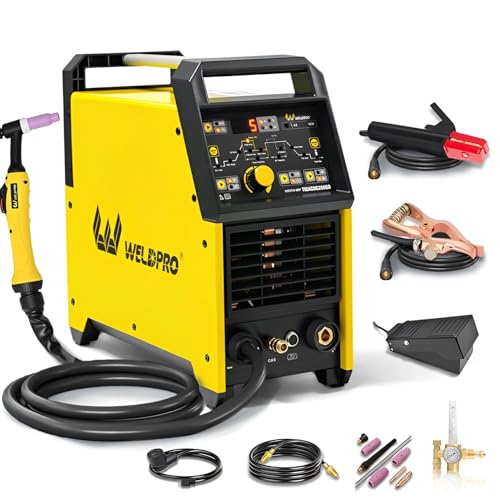
Best for professionals seeking a compact, dual-voltage TIG/MMA welder with advanced aluminum capability. This model combines AC/DC TIG with pulse options and Stick, offering 110V/220V versatility for various work sites. It’s ideal when you need precise aluminum welds and reliable ignition. A caveat is that it may have a learning curve for new users due to its broad parameter range and the need to fine-tune balance, frequency, and pulse for optimum results.
PUWU 205Amp AC/DC Aluminum TIG Welder 6-in-1
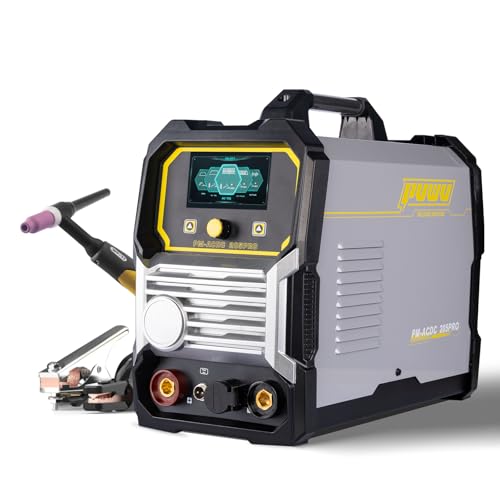
Best for fabrication and repair work with a broad material range. The PUWU unit covers AC TIG, DC TIG, AC Pulse TIG, DC Pulse TIG, MMA/Stick, and Spot TIG. It also offers nine waveforms to tailor heat input, which helps with aluminum and thin sheets. A limitation is that, like many multi-process units, achieving peak performance on thick sections may require higher amperage and stable power supply, so plan for robust electrical access.
YESWELDER 200A AC/DC TIG Welder

Best for hobbyists and DIYers who want straightforward operation with high visibility. The YESWELDER features a large LED display, hot-start for stable ignition, and auto memory to recover previous settings. It’s a solid pick for aluminum and various steels. A potential drawback is that some users may outgrow its settings if they require very precise control across all modes, but it remains a reliable, easy-to-use option for routine projects.
TOOLIOM 200A AC/DC TIG Welder

Best for a balanced bundle of modes with user-friendly display. The TOOLIOM 200A offers AC TIG, DC TIG, AC Pulsed TIG, DC Pulsed TIG, Stick, and Spot TIG, along with a foot pedal option for remote current control. It’s suitable for those who value precision in TIG work and want a larger digital readout for easy parameter tracking. A limitation is that the pedal is not included, so you may need to purchase it separately if you require pedal-enabled control.
Buying Guide
What should you consider when choosing a multiprocess AC/DC welder?
- Materials and applications: If you frequently weld aluminum, look for robust AC TIG and waveform options to minimize heat input and improve arc stability.
- Voltage and power: Dual-voltage machines (110V/220V) provide flexibility for home shops and on-site work. Verify compatibility with your power outlets.
- Waveforms and control: More waveforms (square, sine, triangular) offer better control over heat and cleaning action, especially on aluminum and stainless steel.
- Ease of use: Large displays, auto-set features, and memory functions speed setup and reduce errors for beginners and intermittent users.
- Portability and duty cycle: For small shops or field work, consider weight, case design, and ease of transport. Check the duty cycle for your typical weld thickness.
- Accessory ecosystem: TIG torches, foot pedals, and ground clamps vary by model. Ensure compatibility or plan for additional purchases.
- Limitations of multiprocess units: While versatile, some models may not offer the absolute best performance in every process compared to dedicated machines. Prioritize the processes you’ll use most.
Frequently Asked Questions
- What is a multiprocess AC/DC welder? A unit that can perform AC/DC TIG, Stick, and sometimes MIG or other modes in one machine, suitable for diverse metals and thicknesses.
- Is AC TIG necessary for aluminum welding? AC TIG helps balance aluminum oxide and yields cleaner welds on aluminum alloys, especially for thinner sections.
- Do these welders require special power outlets? Many are dual-voltage (110V/220V) to fit common outlets; verify your site power before purchasing.
- Can I use a TIG welder for stainless steel and copper? Yes, with appropriate settings. DC TIG works well for stainless steel and copper; aluminum often uses AC TIG with pulse control.
- Do I need a foot pedal? A foot pedal enables remote current control; some units include it, others require purchase separately.
- What’s the best starter multiprocess welder? Choose a model with a clear display, auto-set features, and reliable arc starts to ease the learning curve.