Best Portable Abrasive Blasting Machines for DIY Rust and Paint Removal
Answer: For quick, mobile rust, paint, and stain removal, these portable abrasive blasting machines offer compact power with easy air handling. They are ideal for DIY enthusiasts, hobbyists, and small restoration projects needing on-site blasting. The top options here emphasize sturdy construction, adjustable pressure, and convenient features like oil-water separators to keep your compressed air dry. The following table highlights each product’s core capabilities to help you compare at a glance.
| Product | Capacity | Max Pressure | Key Benefit |
|---|---|---|---|
| GarveeTech 20 Gal | 20 gal | 60-110 PSI | High density blasting with moisture control |
| GarveeTech 10 Gal | 10 gal | 60-110 PSI | Lightweight gun, portable, efficient surface treatment |
| 5 Gallon GarveeTech | 5 gal | 60-110 PSI | Balanced size and performance |
| Sand Blaster VEVOR 10Gal | 10 gal | 125 PSI | Higher power for large areas |
| Performance Tool M549 | Gravity-fed | Not specified | Versatile with any abrasive |
GarveeTech 20 Gal Sand Blaster
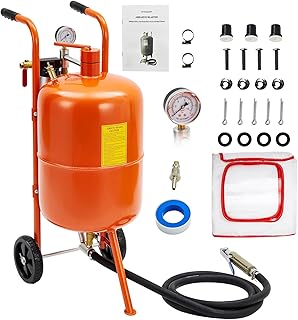
Best for: Home workshops needing robust, high-density blasting with effective moisture control. This 20-gallon model combines welded steel framing with a die-cast aluminum alloy blasting gun for durability and maneuverability. It offers a 60-110 PSI operating range, suitable for removing rust, paint, and stains on iron frames, statues, and marble engravings. The included oil-water separator helps keep compressed air dry, and the gauge supports real-time pressure monitoring during intensive surface treatment. Caution: Heavier than smaller units, this model is less portable for single-handed usage.
GarveeTech 10 Gal Sand Blaster
Best for: Medium projects requiring steady power and good portability. This 10-gallon unit delivers reliable 60-110 PSI blasting with a die-cast aluminum alloy gun for lighter weight handling. It’s well-suited for rust and stain removal on iron frames, statues, car finishes, and marble engravings. An oil-water separator keeps moisture down, and the gauge allows real-time monitoring. Limitation: The maximum pressure is similar to other GarveeTech models, so very heavy-duty blasting may benefit from a larger tank.
5 Gallon GarveeTech Sand Blaster
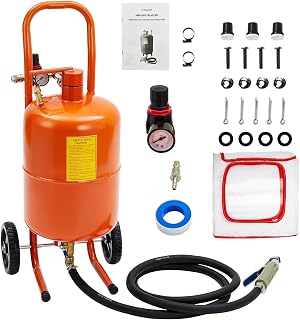
Best for: Light-to-moderate projects where easier transport and fast setup matter. This compact 5-gallon system delivers 60-110 PSI for efficient rust and stain removal on typical surfaces such as iron frames and statues. Its sturdy steel construction and lightweight aluminum blasting gun support comfortable handling. Oil-water separator reduces moisture, and the clear gauge aids precise pressure control. Caution: Smaller reservoir means more frequent recharging during larger tasks.
Sand Blaster VEVOR 10Gal Pot

Best for: Outdoor or semi-permanent work sites with more blasting power. The VEVOR 10-gallon pot blaster reaches up to 125 PSI, delivering approximately 30% more blasting power than siphon units. It’s built from welded steel with protective coating to resist deformation and rust. Two 6-inch wheels and an 8.2-foot hose improve mobility for hard-to-reach areas. Limitation: Requires a separate 5.5 kW air compressor to operate effectively, which adds setup needs and cost.
Performance Tool M549 Portable Gravity-Fed Blaster
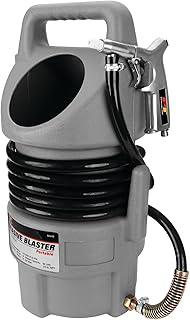
Best for: Users seeking versatility with multiple abrasive options. The gravity-fed design ensures a continuous flow of blasting material, helping maintain consistent performance when removing rust, graffiti, and corrosion. Compatible with abrasive types such as silica, sand, steel grit, glass beads, and pecan shells, enabling different finish options. A caution: Not all projects may require gravity-fed operation; for some tasks, a pressurized siphon unit may be faster.
Buying Guide
- What capacity do I need? Larger tanks (10–20 gal) reduce reloading but add weight. Smaller tanks (5 gal) are easier to move for tight spaces.
- What max pressure is required? Higher PSI speeds up material removal but can increase wear on delicate surfaces. Choose 60-110 PSI for general cleaning and 125 PSI for tougher coatings when appropriate.
- Is mobility a priority? Units with wheels and lighter alloys are easier to maneuver on jobsites or in a garage workshop.
- Do I need moisture control? An oil-water separator helps keep air dry, reducing moisture-related issues during blasting.
- What about power source? Some models need a separate air compressor. Ensure your setup includes a compatible compressor and hoses.
- What surfaces will I treat? Iron frames, statues, car paint, and marble engravings respond differently to blasting media. Consider nozzle size, media type, and surface sensitivity.
Frequently Asked Questions
- What makes a portable abrasive blaster best for DIY projects? A balance of tank capacity, manageable weight, adjustable pressure, and moisture control features that fit home garages and small workshops.
- What is the role of an oil-water separator? It removes moisture from compressed air, improving blasting consistency and protecting equipment.
- Can I use any abrasive with these blasters? Most are compatible with a range of abrasives, including silica, sand, steel grit, glass beads, and even pecan shells. Always verify compatibility with your model.
- Do I need a separate air compressor? Some units require a dedicated compressor with adequate CFM; check your model’s specifications before purchase.
- How do I choose the right PSI for my project? For general rust and paint removal on sturdy surfaces, 60-110 PSI is common. For tougher coatings or larger areas, consider higher PSI where supported, while avoiding damage to sensitive materials.
- Is portability important for outdoor work? Yes. Look for models with wheels, lighter frames, and even long hoses to reach outdoor structures.