Best Explosion-Proof Pressure Transmitter Options for Harsh Industrial Environments
Searching for a reliable explosion-proof pressure transmitter for hazardous or harsh environments? This guide highlights five solid choices designed for safety, durability, and precise measurement in challenging settings. The best picks cater to different needs, from compact, high-accuracy solutions to rugged, all-metal builds suitable for petrochemical, gas, or high-dust applications. The buyers best served include plant engineers, process technicians, and facilities managers responsible for hazardous-location monitoring.
Summary of selected products
| Product | Best For | Key Benefit |
|---|---|---|
| Explosion-Proof Pressure Transmitter, 0 psig to 5000 psig (NOSHOK) | High-pressure hazardous environments | 316 stainless / Elgiloy with no internal seals |
| WinSMART LXP Explosion Proof Pressure Transmitter | Liquids, gases, and process media | 0.2% accuracy, broad media compatibility |
| Explosion-Proof Pressure Transmitter, 0 psig to 1000 psig (NOSHOK) | Moderate range in hazardous locations | Robust welded stainless steel construction |
| NOSHOK Explosion-Proof Pressure Transmitter, 0 psig to 300 psig | Lower-range hazardous monitoring | Durable Elgiloy and welded stainless steel |
| Explosion-Proof Pressure Transmitter, High Precision (Neufday) | Harsh environments with high digital calibration needs | Full digital calibration, anti-jamming design |
Explosion-Proof Pressure Transmitter for Hazardous Locations (NOSHOK) – 0 psig to 5000 psig
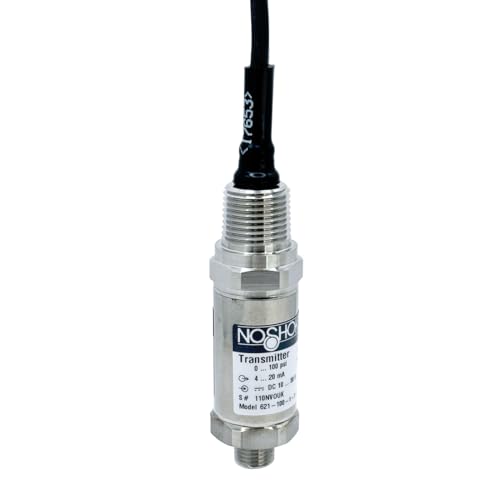
Best for high-range hazardous monitoring. This NOSHOK transmitter is designed for applications requiring large pressure ranges in explosive atmospheres. It uses welded 316 stainless steel and Elgiloy construction with no internal O-rings, gaskets, or seals, boosting reliability in corrosive or pressurized environments. The unit suits process plants, oil and gas facilities, and chemical processing lines where failure is not an option. Limitations include a potentially higher upfront cost and heavier weight due to robust materials.
Explosion-Proof Pressure Transmitter, 0 to 1000 psig – NOSHOK
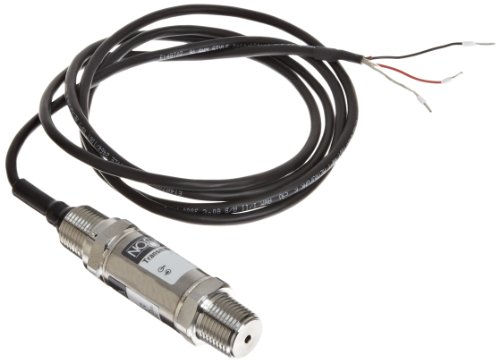
Best for hazardous locations needing moderate pressure monitoring. This NOSHOK model features advanced sensor technology and welded 316 stainless steel with Elgiloy construction, eliminating internal O-rings and seals for fewer leak paths. It’s well-suited for chemical plants, refineries, and other facilities with aggressive atmospheres. Use caution in low-pressure applications where ultra-high precision at extreme ranges is not required, as the range tops at 1000 psig.
NOSHOK Explosion-Proof Pressure Transmitter, 0 to 300 psig
Best for lower-range hazardous monitoring with robust construction. This transmitter uses advanced diffused semi-conductor and sputtered thin-film sensor technology for stability and durability in sour gas or other hazardous environments. It features welded 316 stainless steel and Elgiloy construction, with no internal O-rings or seals. Suitable for smaller peer processes or pilot plants where precise low-range measurements matter.
Neufday High-Precision Explosion-Proof Pressure Transmitter

Best for environments requiring high-precision digital calibration. The Neufday model uses premium stainless steel and die-cast aluminum with full digital calibration and no movable potentiometer drift. It is designed to resist extreme temperatures and electrical interference, making it suitable for petrochemical, power generation, and processing facilities. A potential limitation is its more specialized digital calibration setup, which may require specific integration steps.
LOCADENCE Explosion-Proof Pressure Transmitter

Best for compact, stainless-steel high-precision monitoring. This Locadence transmitter emphasizes full digital calibration and durable stainless steel with die-cast aluminum construction. It is well-suited for tight installations in hazardous environments and where long-term stability matters. A noted limitation is the stated power and wireless compatibility not specified in the listing, which may require verification during procurement.
Buying Guide: Key Considerations for Explosion-Proof Pressure Transmitters
- Protection rating and location class: Confirm the exact hazardous area certification (e.g., ATEX, IECEx, cCSAus) and the area classification where the device will be installed.
- Pressure range and accuracy: Match the transmitter range to your process pressures (e.g., 0–300 psig, 0–5000 psig) and select accuracy (BFSL or digital) that fits your control system needs.
- Materials and construction: Look for welded stainless steel bodies and corrosion-resistant alloys (316 stainless, Elgiloy) to withstand chemicals, humidity, and temperature.
- Output and wiring: Ensure 4–20 mA output compatibility and whether the conduit or cable length meets installation requirements.
- Calibration and adjustments: Consider models with full digital calibration and no potentiometer drift for stable long-term performance in harsh conditions.
- Maintenance and seals: Favor designs with no internal O-rings or gaskets to minimize leak paths in explosive environments.
- Installation considerations: Check mounting dimensions, process connections (NPT sizes), and required space for safe operation and maintenance access.
Frequently Asked Questions
- What is an explosion-proof pressure transmitter?
It is a sensor designed to safely operate in hazardous locations by preventing ignition of surrounding flammable materials, often featuring robust enclosures and proven seals. - Which range is best for hazardous environments?
Choose a range that covers your maximum process pressure with adequate headroom; common options include 0–300 psig, 0–1000 psig, and higher like 0–5000 psig for specialized applications. - Why is stainless steel construction important?
Stainless steel provides corrosion resistance, mechanical strength, and durability in challenging chemicals, high humidity, and temperature fluctuations. - Do I need digital calibration?
Digital calibration improves long-term stability, reduces drift, and simplifies maintenance, especially in harsh environments where manual potentiometers may drift. - What should I verify before purchasing?
Confirm hazard location certification, pressure range, output type, mounting connections, and whether the device supports your process media and temperature requirements. - Are there any drawbacks to explosion-proof transmitters?
They can be heavier and pricier than non-explosion-proof models; ensure you have proper installation space and budget for the additional safety features.