Best Remote Control Valve Irrigation Solutions for Efficient Watering
Remote control valve irrigation simplifies watering by letting you manage valves without trenching or wiring. This guide identifies five top options for different setups—battery-powered, WiFi-enabled, and app-controlled systems—so you can choose the right solution for your garden, greenhouse, or drip system. The selections cater to off-grid needs, smart-home enthusiasts, and multi-valve environments. Use the quick compatibility notes to compare how each product fits your existing irrigation design.
Buying quick view
| Product | Best For | Notes |
|---|---|---|
| Hunter Node 100 Battery Operated Sprinkler Timer | Off-grid, valve-box installs | IP68 waterproof, battery-powered |
| Smart WiFi Water Valve, 1″ Brass Motorized Ball Valve | Smart home control | App, Alexa/Google compatible |
| RAINPOINT WiFi Water Timer | WiFi-based control for yards | 2.4Ghz WiFi and Bluetooth |
| Hunter Node-100-LS Battery Timer | Battery-only remote sites | DC solenoid not included |
| Orbit B-hyve XD 4-Port Timer | Multi-valve yard systems | Bluetooth with app control |
Hunter Node 100 Battery Operated Sprinkler Timer
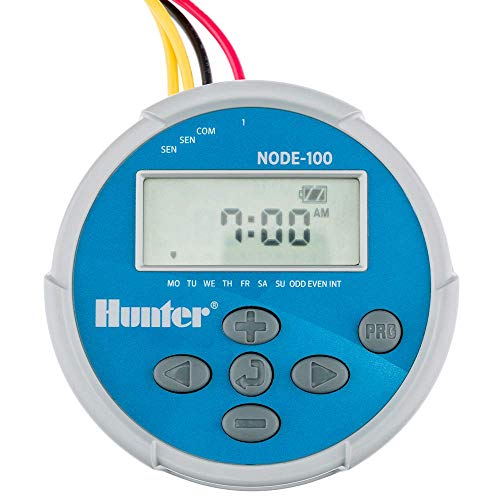
This battery-powered timer is best for remote valve boxes or areas without power. It ships with a pre-wired solenoid for quick connection to most irrigation valves, avoiding trenching or extra controller boxes. It’s ideal for drip or remote systems where DIY or professional installs are preferred. The built-in battery-life indicator helps schedule replacements and minimize downtime.
Best for: Off-grid or isolated zones where quick, wiring-free installation matters. The waterproof, IP68 housing supports year-round outdoor use in harsh conditions. A caveat: rely on battery power; replace batteries as needed to ensure continuous operation.
Smart WiFi Water Valve With Timer

This 1″ brass motorized ball valve is designed for app-based control, with compatibility for Alexa and Google Home. It’s best for homes that want precise, programmable irrigation via a single valve in a greenhouse, garden bed, or sprinkler line. The scheduler supports specific days and times, plus remote access from a smartphone. Consider this as a solid upgrade if you already use smart assistants in your home.
Best for: Homeowners seeking integrated smart-home irrigation control. Choose this if you want easy voice or app control and scheduled watering. Limitations: requires a stable WiFi connection and may involve ongoing app usage for full features.
RAINPOINT WiFi Water Timer
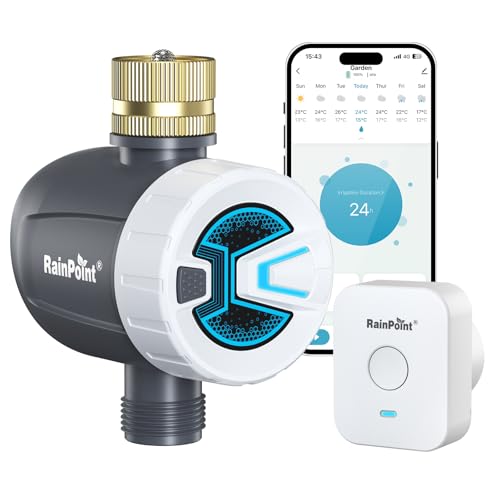
This timer combines WiFi control with multi-timer expansion, supporting 2.4Ghz connectivity and Bluetooth. It’s best for yards or greenhouses where you want remote monitoring via an app and the option to pair with a soil moisture meter for better watering precision. It offers 24/7 monitoring and flexible scheduling with a 1-minute to 12-hour range for automatic watering.
Best for: Users who want scalable, WiFi-enabled irrigation with potential soil-moisture integration. Limitation: WiFi dependency means performance can dip in weak network areas.
Hunter Node-100-LS Battery Timer

This model provides dependable battery-operated control for sites without AC power, with a built-in battery-life indicator to signal when replacements are needed. The enclosure is designed to be durable and waterproof for outdoor use. It’s best for temporary or remote installations where wiring is impractical. Use caution about battery maintenance and availability.
Best for: Off-grid sprinkling zones and DIY projects where power is unavailable. Limitation: Requires battery replacements on a schedule to avoid downtime.
Orbit B-hyve XD 4-Port Smart Hose Timer
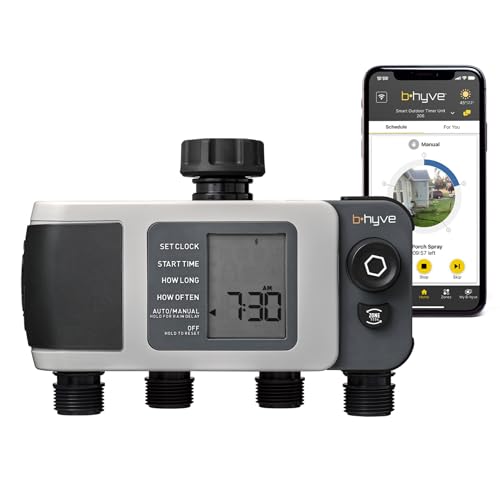
This 4-port smart timer supports multiple hoses or zones with app control and weather-aware features. It’s best for yard installations that require centralized control of several outlets. The WeatherSense technology helps adjust schedules in response to rain and temperature, potentially saving water. A limitation is that it may be larger and more complex than single-valve systems.
Best for: Multi-zone yard irrigation with app-based scheduling and weather-responsive watering. Choose this if you want centralized, scalable control across several hoses or zones.
Buying Guide
- Power source: Decide between battery-powered, USB-powered, or mains-powered units. Battery options offer off-grid placement but require battery maintenance, while mains-powered models may need wiring or a nearby outlet.
- Connectivity: Choose between Bluetooth, WiFi, or RF remote control. WiFi enables remote access from anywhere, while Bluetooth works well for local control without network dependence.
- Valve compatibility: Check valve type and solenoid requirements. Some units include a pre-wired solenoid; others require purchasing or matching solenoids separately.
- Weather and environment: Look for IP-rated enclosures for rain and dust exposure. Outdoor durability is essential for year-round use in harsh conditions.
- Multi-zone needs: If you manage several zones, prefer a multi-port timer or a hub that supports multiple outlets to simplify scheduling and water management.
- App features and automation: Consider schedules, weather skips, moisture integration, and remote control capabilities. Apps with local weather intelligence can save water and reduce waste.
FAQ
- Do these valves require professional installation? Many are designed for DIY installation, especially those that mount directly to valves and include pre-wired solenoids. Always follow the manufacturer’s installation instructions.
- Can I mix different brands in the same irrigation system? Yes, as long as the valves are compatible with the controller’s power and signaling standards. Verify solenoid voltage and thread compatibility.
- Which is best for off-grid irrigation? Battery-operated units with waterproof housings are preferable for valve boxes and remote zones without power supply.
- Is weather data essential for smart timers? Weather-aware timers adapt irrigation to conditions, reducing water use. If your area has irrigation restrictions, choose models with schedule rules and rain skipping.
- Do I need a hub for multi-valve control? Some systems require a hub or app with multiple timers to coordinate several outlets. Check hub compatibility if you plan a larger installation.