Best Rolled Steel Angle Section for Strong Structural Frames
Answering your search for durable rolled steel angle sections, this guide highlights five solid picks suitable for home workshops, professional builds, and industrial projects. Each product is evaluated for best use cases, size, and fabrication practicality. The list covers hot-rolled carbon steel angles for strength, plus a stainless option for corrosion resistance. Whether you’re building workbenches, frames, or braces, these selections help you choose the right angle section based on load, ease of cutting, and compatibility with welding or forming. Ideal buyers include DIY hobbyists, fabricators, and contractors seeking reliable metal framing.
Summary table of selected products:
| Product | Best For | Key Feature | Length |
|---|---|---|---|
| National Hardware N301-507 | Heavy-duty benches and stands | ASTM A36 hot-rolled steel | 36 in |
| Rocaris Hot Rolled Angle | Precise, drillable supports | 1.6 in equal legs | 12 in |
| Bulb Industries 2×1/8 | General framing, USA-made | Premium hot-rolled steel | 12 in |
| MSP Metals 4×4 angle | Large frames and braces | A36 carbon steel | 12 in |
| Online Metals 304 Stainless | Corrosion-prone environments | 304 stainless steel | 36 in |
National Hardware N301-507 Solid Angle Iron

Best for: Heavy-duty worksurfaces, repair frames, and construction projects requiring maximum strength. This 1-1/2 inch by 36 inch hot-rolled angle iron is designed to provide reliable support for workbenches and equipment stands. It conforms to ASTM A36, facilitating welding and fabrication without interference from oil treatments. Best if you need a straightforward, sturdy frame member with professional-grade durability.
Why selected: The combination of a robust 36 inch length and A36 hot-rolled construction makes this angle ideal for high-load installations. It’s easy to weld and fabricate on site, supporting long-term stability in busy workshop environments.
Caution: Check on-site spacing to ensure you have clearance for welding and any coatings you plan to apply. The surface is plain steel and will require protective finish if used outdoors.
Rocaris Hot Rolled Steel Angle Iron 1.6″ x 1.6″ x 3/16″
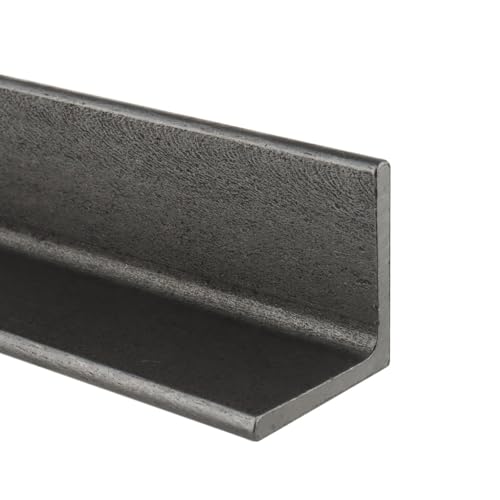
Best for: Precise small- to medium-scale structural supports where equal legs and a clean, burr-free finish matter. The 1.6″ x 1.6″ equal-leg L-shaped angle with 0.18″ wall thickness is easy to cut, drill, and weld, making it versatile for braces and frames in compact spaces.
Why selected: The equal-leg design provides predictable load paths and straightforward fabrication. Its hot-rolled finish supports good strength with manageable weight for project scopes like shelving or light industrial frames.
Caution: The 12 inch length limits span; plan multiple pieces or connectors for longer runs. Verify edge burrs are removed before assembly for clean joints.
Bulb Industries Hot Rolled Mild Steel Angle 2×1/8

Best for: General framing, workshop benches, and domestic fabrication projects where USA-made steel is valued. The 2″ x 1/8″ angle provides a balanced option between strength and ease of handling for standard frames and braces.
Why selected: Premium USA-made hot-rolled steel offers reliable consistency for straight cuts and predictable welding behavior, making it a strong baseline choice for typical DIY or light commercial builds.
Caution: Heavier sections require appropriate tools and safety measures during handling and cutting. Check compatibility with your preferred welding method.
MSP Metals Hot Rolled A36 Angle 4″ x 4″

Best for: Large-frame projects, structural supports, and heavy braces where equal legs and high strength are required. The 4″ x 4″ angle with compatible wall thickness is ideal for robust, load-bearing constructions.
Why selected: A36 hot-rolled carbon steel provides consistent properties and strong performance in structural roles, delivering dependable rigidity for larger assemblies and fabrications.
Caution: Larger angles can increase build weight; ensure your design accounts for overall weight and handling during installation.
Online Metals 304 Stainless Steel Angle

Best for: Environments where corrosion resistance is important, such as food processing or chemical handling areas, or where clean aesthetic finishes matter. The 3/4″ leg length and 1/8″ wall thickness offer a compact stainless option.
Why selected: 304 stainless steel combines strength with corrosion resistance, expanding use cases beyond typical carbon steel environments. It’s suitable for assemblies requiring longer life in challenging conditions.
Caution: Stainless steel can be more challenging to weld for amateurs; ensure proper technique and filler materials for stainless joins.
Buying Guide
What should you consider when choosing rolled steel angle sections?
- Material type: Choose hot-rolled carbon steel for high strength and affordability, or stainless steel for corrosion resistance and aesthetic needs.
- Leg dimensions and thickness: Match your load requirements with the leg length and wall thickness. Equal-leg angles simplify symmetrical designs; unequal legs offer unique fit options.
- Length and cutability: Longer sections reduce joints but require larger cutting tools. Confirm available lengths align with your project plan.
- Finish and compatibility: Bare cold or hot-rolled surfaces may need coating or finishing. Welding and forming compatibility varies by material.
- Environment: Outdoor or humid environments demand protective coatings or stainless steel to prevent corrosion and prolong life.
FAQ
- What is the main difference between hot-rolled and stainless steel angles?
Hot-rolled carbon steel offers strength and lower cost, while stainless steel provides corrosion resistance and a distinct finish. - Which angle size is best for bench frames?
It depends on load; common bench frames use 2×2, 3×3, or 4×4 angles with suitable thickness for stability. - Can I weld rolled steel angles directly?
Yes, especially hot-rolled carbon steel angles designed for fabrication; ensure proper welding procedures for the chosen alloy. - Are equal-leg angles easier to work with?
Equal-leg angles provide predictable geometry and symmetric joints, which simplifies fabrication. - Do I need protective coating for outdoor use?
Yes, for carbon steel angles, apply paint, primer, or galvanizing to prevent rust; stainless steel is more weather-resistant but not invincible.