Best Self-Dumping Trash Hopper for Forklifts: Safe, Efficient Waste Handling
Answering the demand for efficient, one-person waste handling, these self-dumping trash hoppers are designed to lift, tilt, and dump materials with minimal effort. Best for warehouses, factories, and distribution centers, these hoppers improve throughput and reduce manual labor. The top picks below emphasize durability, smooth dumping action, and compatibility with standard forklifts. This guide helps operators choose the right model based on capacity, dumping mechanisms, and build quality.
HQHAOTWU Self-Dumping Hopper For Forklifts

Features: Carbon steel construction for high strength, spray coating for wear resistance and rust protection, self-dumping with a large tilt angle, fork bag welded to the bottom for compatibility with different forklifts.
Best for: Heavy-duty applications where high durability and reliable dumping are essential, such as busy loading docks and manufacturing floors. The design supports sturdy lifting and reduces spillage risk.
Why selected: Combines robust steel with a practical self-dump design and a secure fork bag, enabling stable operation across various forklift setups.
Caution: The large tilt angle requires adequate clearance; ensure working space is clear to avoid contact with surroundings.
JARYANNIX Self-Dumping Hopper, 520L
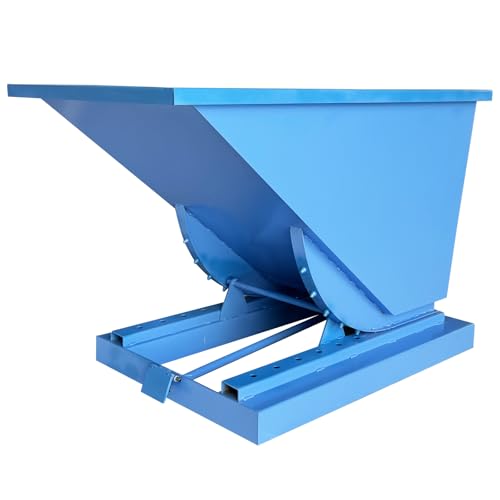
Features: 520L capacity, carbon steel body, 2,204-lb rated load, dual-control automatic dumping (front and rear), designed for fast, hands-free unloading.
Best for: Factories and warehouses needing high-capacity waste handling with flexible operator control and quick dump cycles.
Why selected: Dual-control dumping improves operator options and safety, especially in high-throughput environments.
Caution: Heavier models may require more frequent forklift maintenance and careful weight distribution during transport.
WRIGHT 1 Cubic Yard Self Dumping Hopper

Features: 4000-lb capacity; positive latch release to prevent accidental dumping; balanced design that rolls forward when loaded and returns to the upright position after dumping.
Best for: Large operations requiring dependable dumping action with strong load handling and a simple reset after unloading.
Why selected: Balanced unloading and automatic return to the ready position streamline repeated dumping cycles.
Caution: Ensure the path of travel is clear; a heavy load can shift unexpectedly when dumping begins.
Global Industrial 2 Cu Yd Medium Duty Hopper, Yellow

Features: 4000-lb capacity, 2 cubic yard capacity, 3″H x 28-1/2″W fork pockets, yellow color for high visibility, medium-duty construction.
Best for: Operators needing a large-capacity hopper with reliable, one-person operation and standard fork pockets.
Why selected: A practical balance of capacity and accessibility, suitable for frequent, routine dumps in busy facilities.
Caution: Mid-range materials may not withstand extreme corrosion; consider additional rust protection in humid environments.
Rubbermaid Commercial Self-Dumping Cart, 1 Yard

Features: 1 cubic yard capacity, heavy load handling, casters for mobility, rust and dent resistance, designed for distribution centers and warehouses.
Best for: Environments prioritizing easy maneuverability and a safe dumping mechanism with a low-maintenance build.
Why selected: Combines high load capacity with mobility, making it suitable for wide-area waste handling and frequent dumps.
Caution: Some users may prefer steel for extreme heaviness or outdoor exposure; check caster stability with frequent use.
Buying Guide: How to Choose the Right Self-Dumping Hopper
- Capacity needs: Match hopper capacity to typical waste loads. For bulk debris, higher capacities reduce trips; for lighter waste, smaller models save space.
- Dump mechanism: Consider front or rear control and whether dual controls are advantageous for operator flexibility and safety.
- Material and durability: Carbon steel hoppers offer strength and corrosion resistance when properly coated, while lighter alloys save weight but may wear faster.
- Fork compatibility: Check fork pockets dimensions and whether a fork bag or reinforced base improves stability during lifting.
- Dump angle and clearance: A larger tilt angle accelerates unloading but requires sufficient overhead and side clearance to avoid collisions.
- Safety features: Look for positive latches, automatic returns, and stable wheel bases to prevent accidental dumping and tipping.
- Maintenance considerations: Rust resistance, weld integrity, and surface coatings affect long-term performance in warehouse environments.
FAQ
- What is self-dumping hopper capacity? Capacity ranges from about 1/4 cubic yard to 2 cubic yards, with 4000-lb load ratings common for heavy-duty models.
- Can these hoppers fit any forklift? Most have standard fork pockets, but always verify fork pocket dimensions and compatibility with your forklift model.
- Are these hoppers safe to use alone? Many designs support one-person operation, but never operate near bystanders during dumping.
- What materials are best for long-term use? Carbon steel with corrosion-resistant coatings is common for durability in industrial settings.
- Do I need a venting or safety latch? Yes, safety latches reduce accidental dumping, and venting helps with smooth tilting in some designs.
- How do I choose between front- and rear-controlled dumping? Front control is often simpler for the operator on the forklift; rear control can allow different unloading angles and workflows.