Best Small Band Saw Machines From Leading Suppliers for Woodworking
Find the right compact band saw for your shop with this concise guide. These five models fit tight spaces, offer solid cutting performance, and suit hobbyists and small shops alike. Best for woodworkers who need precise cuts, metalworkers seeking portable capability, and DIY enthusiasts evaluating budget-friendly options. The top picks cover benchtop and handheld styles, with varying motor power, cutting depths, and tilting tables to fit different materials and workflows.
| Product | Best For | Key Feature |
|---|---|---|
| WEN 9-Inch BA3959 | Beginner to intermediate woodworkers | 2.8-amp motor, 9″ cutting width |
| SEESII 3A-120V 8″ Band Saw | Small shops and hobbyists | 8″ cutting width, 0-45° tilting table |
| WEN 10-Amp Portable Metal Band Saw | Metal cutting on the go | 10-amp motor, 5″ cut capacity |
| MAXXT 10-Amp Metal/Wood Cut Band Saw | Versatile metal and light fabrication | Aluminum base, adjustable speed |
| Towallmark 8-Inch Benchtop Band Saw | Woodworking with bevel cuts | 0-45° tilting table, 3-1/2″ height |
WEN 9-Inch Band Saw, 2.8-Amp Benchtop (BA3959)

The WEN BA3959 is a compact benchtop band saw designed for basic straight and curved wood cuts. It features a 2.8-amp motor that drives the blade to 2500 feet per minute, enabling efficient material removal on softwoods and light hardwoods. The saw supports up to 9 inches in width and 3-1/2 inches in cutting depth, making it suitable for small frames, toy parts, and hobbyist projects. Blade options range from 1/8 to 3/8 inches, offering versatility for different cut profiles.
Best for: hobbyists and beginners who need a compact, low-cost entry into band saw work, particularly for simple cuts in 1/8″ to 3/8″ blades. Choose this if you prioritize budget-friendly, space-saving operation and straightforward setup.
Caution: The 2.8-amp motor is lighter than larger models, so expect slower cuts on very hard woods and thicker stock. For frequent heavy ripping, a higher-power model may be preferable.
SEESII Benchtop Band Saw for Woodworking

The SEESII 8″ benchtop band saw emphasizes compact size with a 350-watt motor and a blade speed of 900 RPM for controlled, clean cuts. Its 8-inch throat allows cabinet doors, small panels, and light resawing, while the 3-1/8″ adjustable cutting height supports a range of materials from veneer to hardwoods. The 0-45° tilting table enables bevel cuts, and the included fence and miter gauge help with precise parts for boxes, toy components, or jewelry boxes. This model is well-suited for hobbyists who need detailed cuts without a large footprint.
Best for: small-shop owners and hobbyists who want a stable, space-conscious tool with versatile beveling and adjustable cutting height for intricate woodwork. Choose this if you need a quiet, home-friendly design with straightforward setup.
Caution: The power rating is modest; heavy, continuous production on hardwoods may require a larger motor or a dedicated metal/wood bandsaw for higher throughput.
WEN Portable Band Saw for Metal, 10-Amp

This handheld metal band saw from WEN packs a 10-amp motor capable of cutting metal and other tough materials with a generous 5-inch width and depth capacity. The unit’s variable speed lets users dial blade speed to match material type, helping minimize heat buildup and burrs. Its portability makes it ideal for on-site work, shop-based fabrication, and quick cuts on pipes and tubes. The design emphasizes a balance between power and maneuverability for metalworking tasks that require mobility.
Best for: metalworkers and fabricators who need a portable solution for on-site or shop tasks, especially when cutting steel, aluminum, and other metals. Choose this if you value a high-power, handheld option for quick, controlled metal cuts.
Caution: It lacks the rigid stability of a stationary band saw; for precise long straight cuts on thick stock, a benchtop or floor model may yield straighter results.
MAXXT Band Saw with Lightweight Aluminum Base
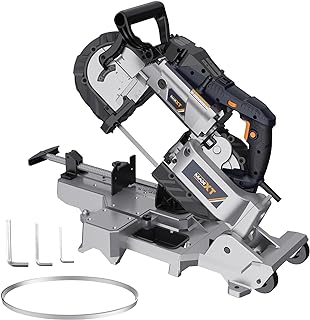
The MAXXT model features a robust 10-amp motor and a 5-inch deep cut capacity with an emphasis on portability. Its automatic cutting function stops after the cut completes, supported by a base that enables manual or base-mounted operation. The unit includes carrying wheels and a sturdy aluminum table top to promote stability and easy handling. Blade speed is continuously variable from 60 to 420 feet per minute, enabling tailored performance for metal and other materials. It supports cutting through steel, aluminum, PVC, and more with minimal burrs.
Best for: metalworking enthusiasts and small fabrication shops needing flexible operation and a portable metal-cutting solution. Consider this if you want automatic shutdown after each cut and adjustable speed for different materials.
Caution: Heavier metals or demanding production can push the motor; for continuous heavy-duty use, verify duty cycle expectations and heat management.
Towallmark 8-Inch Benchtop Band Saw

The Towallmark 8-inch benchtop model offers a 3-1/2″ maximum cutting height and an 8″ cutting width with a 55-5/16″ blade. Its 1800 RPM motor provides steady performance for wood, aluminum, copper, and plastics. The table tilts from 0° to 45°, enabling bevel cuts for furniture components and intricate wood projects. Included fence and miter gauge aid in precise straight and angled cuts, while a rigid steel body minimizes vibration during operation.
Best for: woodworkers who frequently perform bevel or compound cuts and need a compact, stable bench unit. Choose this if you want a budget-friendly entry with reliable tilting-table functionality.
Caution: While capable for light-metal work, this model is primarily designed for wood; expect limitations with thick metal stock compared to dedicated metal bandsaws.
Buying Guide
What should I consider when choosing a small band saw?
Motor power vs. material type. Woodworking models typically use 2–10 amps. For metal, higher power helps with harder materials, but may add weight and size.
Cutting capacity. Measure the maximum cutting height (throat depth) and width to ensure you can handle your typical stock. Be sure the tilt range matches your bevel-cut needs.
Table features. A tilting table (0–45°) enables bevel cuts; a robust fence and miter gauge improve accuracy for repeated parts.
Portability. If you need on-site work or a small shop footprint, handheld or light benchtop models with wheels offer mobility. For precision, a stable benchtop unit is preferable.
Blade compatibility. Check blade width compatibility (commonly 1/8″ to 3/8″ for wood, broader options for metal). Availability and cost of blades affect long-term usability.
Durability and noise. Look for a rigid frame, vibration damping, and reasonable noise. Steel frames and solid bases enhance stability during operation.
Which features provide the best value for beginners?
Lower price point, compact size, straightforward setup, and adequate cutting depth for common hobby projects typically offer the best balance for new users.
Look for included fences, miter gauges, and blade options to expand capabilities without additional purchases.
How to compare between metal and wood bandsaws?
Wood saws focus on clean bevels and curves with softer stock. Metal saws emphasize higher amps, robust frames, faster blade speeds, and deeper cuts for tube and bar stock.
Maintenance tips for longevity
Regularly align the blade, check the tension, and clean sawdust buildup. Lubricate moving parts as recommended by the manufacturer, and replace worn blades promptly to preserve cut quality.
FAQ
- What is the typical blade size for these small band saws?
Common sizes range from 1/8″ to 3/8″ for wood, with variations for metal models. Confirm blade compatibility in the product specs.
- Is a tilting table essential for beginner projects?
It helps with bevel cuts and complex shapes, but is not strictly required for basic straight cuts.
- Can these machines cut metal or plastic besides wood?
Some models are designed for metal and plastics; always check motor power and blade type to ensure suitability for your material.
- Do these small band saws require specialized blades?
Blade type and width vary by material. Keep a few blades on hand to switch between wood, plastic, and metal tasks.
- Which model is best for a tight workspace?
Benchtop, compact units with narrow footprints and lightweight frames are ideal for limited spaces.
- Are these suitable for professional fabrication?
They suit hobbyists and light-duty projects. For continuous production or heavy-duty metal work, consider a larger, purpose-built band saw.