Best Small Propane Greenhouse Heaters for Efficient Plant Warmth
Short answer: choose a compact, reliable heater designed for humid, plant-friendly environments. This guide highlights five small greenhouse heaters—three propane-powered models and two electric options—chosen for compact spaces, safety features, and effective heat distribution. Whether you’re heating a tight grow tent, a seedling bench, or a small workshop, these selections help maintain healthy growth while minimizing energy waste. The top picks are best for hobby growers, basement setups, and small commercial tents where space is limited but consistent warmth is essential.
Summary table of chosen products:
| Product | Type | Best For |
|---|---|---|
| Mozodawn 2 in 1 Propane Heater & Stove | Propane heater & stove | Outdoor tents, patios, campsites, and emergency warmth with cooking capability |
| Mr. Heater Buddy 9,000 BTU | Propane radiant heater | Small spaces, indoor/outdoor use, quick warmth for 225 sq ft |
| Mr. Heater 30,000 BTU Vent Free | Propane heater | Larger ventilated spaces up to about 1,000 sq ft |
| VEVOR 1500W PTC Electric Heater | Electric | Humid grow tents and where electric is preferred or required |
| LHUKSGF Digital Thermostat Heater | Electric heater with thermostat | Precise temp control in greenhouses, tents, and garages |
VEVOR Greenhouse Heater, 1500W PTC With Overheat Protection

Best for small grow tents and hobby rooms that require quiet, efficient heat without open flames. This model uses PTC technology to deliver fast heating with a reported 5100 BTU output and low noise. It includes overheat protection and ETL certification for safety in damp environments. The unit’s IP20 rating provides basic protection against dust, making it suitable for humid greenhouses, flower rooms, or indoor workspaces.
Who it’s best for: buyers seeking a compact electric option with straightforward controls and safety features. Limitation: not a propane source, so it won’t double as a cooking or outdoor heating device.
Mr. Heater Buddy Radiant Propane Heater
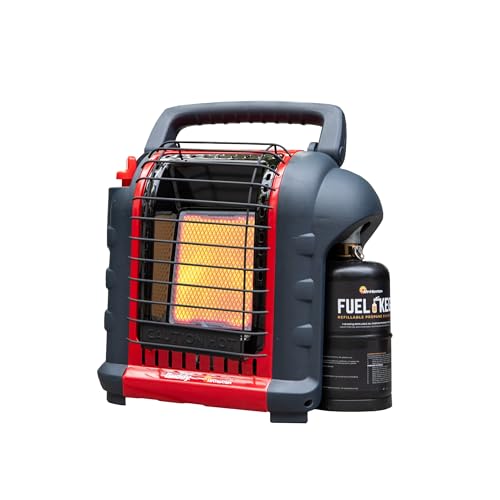
This compact propane heater is designed for both indoor and outdoor use, delivering 4,000 or 9,000 BTU/hr radiant heat. It’s ideal for small spaces up to about 225 square feet and can quickly warm a seedling bench or small greenhouse corner. Best for: portable warmth with quick heat on demand. Caution: ensure adequate ventilation and follow safe operation guidelines in enclosed spaces.
Mr. Heater 30,000 BTU Vent Free Propane Heater

Designed for larger, ventilated spaces, this vent-free propane heater delivers up to 30,000 BTU and can heat areas up to about 1,000 square feet. Best for greenhouses that require rapid, wide-area warmth and where ventilation is available. Choose this if your space is larger or you need a higher heat output. Limitation: requires proper ventilation to ensure safe operation and odor control in enclosed spaces.
MOZODAWN 2 in 1 Propane Heater & Stove

Combining heat with cooking capability, this 2-in-1 propane heater and stove is well-suited for outdoor tents, camping, and emergency warmth. It provides up to 13,000 BTU with 360-degree radiant heat and includes a stable stainless steel interface for durability. Best for: outdoor use or situations where both warmth and cooking capability are valuable. Caution: ensure safe setup and proper usage in open-air environments to avoid gas buildup indoors.
VEVOR Thermostat-Equipped 1500W Electric Heater

This model supports precise temperature control with a dedicated thermostat and a 1500W heater element. It’s suitable for greenhouse spaces where consistent temperature control is critical for seedlings and cuttings. Best for: growers needing steady, adjustable heat with soil-temperature considerations. Limitation: electric-only, so it won’t function without power supply.
Buying Guide
What should I consider when choosing a small greenhouse heater?
- Heat source: Propane vs. electric. Propane offers portability and strong heat output for larger, ventilated spaces; electric provides precise control and is safer in humid, enclosed setups.
- Size of space: Measure your tent or greenhouse area to select BTU or wattage that fits without overheating. Smaller spaces benefit from 4,000–9,000 BTU for indoor use; larger tents may need 10,000–30,000 BTU, depending on ventilation.
- Ventilation and safety: Propane heaters require proper ventilation to prevent buildup of gases. Electric heaters should have overheat protection and thermostats for safety and efficiency.
- Temperature control: Digital thermostats help maintain steady conditions, which is important for seedling health and uniform growth.
- Durability in humidity: Look for IP ratings and ETL or equivalent certifications for reliable operation in damp environments.
- Portability and setup: If you need to move the heater, check weight, handles, and base stability. Consider 2-in-1 options if outdoor use is expected.
How to use safely
- Ensure adequate ventilation when using propane heaters in enclosed spaces.
- Place heaters on stable surfaces away from flammable materials.
- Never leave heaters unattended in tents or greenhouses with children or pets.
- Regularly inspect wiring, hoses, and connections for leaks or wear.
What to compare across models
- Heat output and efficiency (BTU or watts)
- Heat distribution pattern (direct radiant vs. circulating air)
- Safety features (overheat protection, tip-over switch, thermostat)
- Noise levels for quiet workspaces
- Portability and installation requirements
FAQ
- Can I use a propane heater inside a greenhouse?
- What size heater do I need for a 20 square foot tent?
- Are electric heaters safer than propane for greenhouses?
- Should I choose a thermostat-controlled heater?
- Is 1500W enough for most small greenhouses?
- What maintenance is required?
Yes, but ensure proper ventilation to prevent gas buildup and maintain air quality for plants.
A heater providing roughly 4,000–8,000 BTU is typically sufficient, depending on insulation and climate.
Electric heaters avoid combustion byproducts but require a reliable power supply and may be less practical for very cold outdoor setups.
Yes. A thermostat helps maintain stable temperatures essential for plant growth and reduces energy waste.
Often yes for compact spaces, especially when paired with good insulation and a thermostat.
For propane: check hoses and connections for leaks and clean vents. For electric: inspect cords, switches, and safety cutoffs regularly.