Best Loading Dock Equipment Systems for Efficient Warehousing
Answer: For streamlined loading dock operations, choose durable, maintenance-friendly equipment that matches your dock size and handling needs. This guide highlights five top products suited for warehouses and industrial loading bays, with quick notes on who benefits most and potential limitations. The listed items cover levelers, protection, and bumper systems to help prevent damage and speed up daily tasks. The buyer overview below summarizes key options at a glance.
| Product | Type | Best For | Notes |
|---|---|---|---|
| BLUFF Edge-of-Dock Levelers – 78″W Plate | Dock Leveler | One-person operation, small to mid-sized warehouses | Spring lift system; easy single-handed use |
| 6 x 8 ft. Electric Hydraulic Dockleveler – 30000 lbs | Electric Hydraulic Leveler | High-traffic docks, heavy loads | Push-button operation; automatic lip extension |
| Guardian Rubber Dock Bumper 36″ x 12″ x 4.5″ | Dock Bumper | High-traffic loading bays needing wall/door protection | Laminated rubber, wide impact coverage |
BLUFF Edge-of-Dock Levelers – 78″W Plate

Features: Bluff EZ-Pull EDGE OF DOCK LEVELER with Spring Lift System. Designed for one-man operation and reduces back strain. Operate by lifting and pulling the self-storing handle to the dock floor; the latch activates the leveler lip forward into the trailer floor.
Best for: small to medium warehouses needing simple, low-effort dock leveling with minimal crew. Why selected: compact, single-user design and quick setup support fast dock cycles. Caution: May require manual alignment and is best suited for lighter daily throughput compared with hydraulic systems.
6 x 8 ft. Electric Hydraulic Dockleveler – 30000 lbs
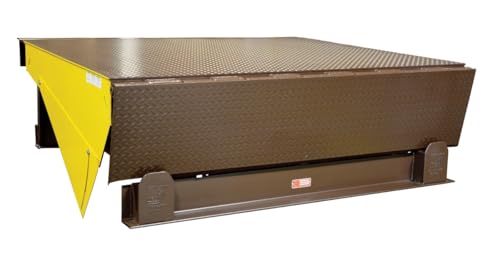
Features: Hydraulic design with simple push-button operation. Deck-lip extends automatically for loading and unloading. Size: 6 x 8 ft, rated for up to 30,000 lbs.
Best for: busy docks with heavy equipment and frequent palletized loads. Why selected: hydraulic systems deliver consistent performance with minimal physical effort. Caution: higher initial cost and service considerations compared to manual options.
Guardian Rubber Dock Bumper, 36″ x 12″ x 4.5″

Features: Laminated rubber bumper for heavy-duty dock protection. 36″ x 12″ x 4.5″ with 28″ x 12″ bumper coverage and 4.5″ projection. Steel mounting bracket and 3/4″ mounting holes.
Best for: warehouses facing high trailer impact and frequent dock-side events. Why selected: robust protection that minimizes wall and door damage. Caution: wide footprint requires sufficient dock wall space for installation.
Guardian Dock Bumper, 24″ x 10″ x 6″

Features: Laminated rubber bumper with 24″ x 10″ x 6″ measurements and 20″ x 10″ bumper coverage. 6″ projection with steel mounting bracket.
Best for: mid-sized loading bays needing efficient impact absorption. Why selected: balanced protection and installability. Caution: ensure wall clearance for the larger projection in tight docks.
Dock Edge + ProDock Commercial Grade Heavy P Dock Bumper

Features: Heavy wall construction for universal use; molded-in mounting groove for easy installation. Designed for marinas and commercial applications.
Best for: docks and loading bays that require durable, multi-application bumper protection. Why selected: versatile mounting and robust protection across harsh environments. Caution: installation may require precise groove alignment for best results.
Buying Guide
What to consider when selecting dock equipment:
- Dock size and load: Match leveler length and capacity to dock width and typical pallet weights.
- Operation style: Manual pull, push-button hydraulic, or electric options affect labor needs and maintenance.
- Protection needs: Bumpers should align with trailer traffic volume and wall materials to prevent damage.
- Environmental conditions: Outdoor docks require corrosion-resistant components and weather seals.
- Maintenance and service: Consider availability of parts, service intervals, and ease of inspection.
- Space and installation: Ensure mounting clearances and wall space accommodate bumper projections and lip lengths.
Practical comparison questions
- Which system reduces worker strain the most? Hydraulic and spring-assisted levelers typically require less physical effort than manual options.
- What is the best choice for high-traffic docks? Electric hydraulic levelers with robust lip extension and fast cycle times.
- How much protection do bumper systems provide? High-coverage, laminated rubber bumpers absorb more impact and preserve dock walls.
- Are multiple bumper sizes necessary? Depending on door dimensions and trailer types, yes. Choose sizes that cover most anticipated impacts.
FAQ
- Q: Do I need a hydraulic system for every dock? A: Not necessarily; consider load volume, crew size, and maintenance capability.
- Q: Can bumpers be replaced individually? A: Yes, most bumpers are modular, allowing replacement without full dock reconstruction.
- Q: What safety features are common? A: Lip activation, stow/descent controls, and secure mounting reduce misalignment and injuries.
- Q: How do I measure for a leveler? A: Measure dock width, bumper heights, and trailer lip height to ensure compatibility.
- Q: Do these products require professional installation? A: Some installations are DIY-friendly, but professional mounting ensures proper alignment and safety.
- Q: Are there maintenance tips to extend life? A: Regular lubrication, inspection of lips and hinges, and checking mounting brackets help longevity.