Best Vacuum Leak Test Kit Solutions for Auto Diagnostics
For automotive professionals and DIY enthusiasts, a vacuum leak test kit is essential to identify and repair leaks that affect performance and efficiency. This guide highlights five top kits, showing who each is best for and why. The top picks cover different budgets, power sources, and feature sets to suit EVAP, vacuum, intake, and cooling system testing. The buyer will find options from American-made tools to versatile, all-in-one kits. A quick comparison helps determine which kit matches your needs, whether you value built-in compressors, rapid smoke generation, or broad compatibility with different vehicles.
| Product | Best For | Key Value |
|---|---|---|
| AutoLine Pro HyperSmoke Automotive Smoke Machine | Professional diagnostics, workshop use | HyperSmoke for thick, visible smoke; OEM fluid; built-in compressor |
| Solary Automotive Smoke Machine Leak Detector | Portable, quick checks | Built-in air pump; fast detection |
| AutoLine Pro Shop Series Smoke Machine | Durable, long-hours testing | Metal build; long continuous operation; universal air compressor compatibility |
| OMT Coolant Pressure Tester Kit | Coolant systems and radiator work | 26-piece set with multiple adapters |
| VTG VOGTEN 28PCS Coolant Pressure Tester Kit | Comprehensive coolant testing | 23 adapters; vacuum refill capability |
AutoLine Pro HyperSmoke Automotive Smoke Machine EVAP Vacuum Leak Tester

Best for professional shops and serious diagnosticians, this HyperSmoke machine uses thick visible smoke to locate leaks quickly. Its adjustable pressure and infinite smoke modes enable tailored testing across EVAP, vacuum, intake, exhaust, turbo, and more. A built-in air compressor motor reduces setup clutter, and OEM-approved smoke fluid ensures safe testing. The kit’s design emphasizes reliability and precision, making it a strong choice for high‑volume diagnostic work. Limitations include the need for space and a steady workflow to justify the investment for smaller operations.
Who it’s best for and why
- Best for: Shops performing frequent, varied leak tests and those who require durable, high-output testing.
- Why: The integrated compressor, fast warmup, and OEM-grade fluid support continuous use with clear results.
Key features include HyperSmoke technology, adjustable pressure, and a comprehensive leak-testing scope that covers engines, exhaust, and cooling systems. It is designed in the USA, signaling a focus on professional-grade tooling and component quality.
Caution: Ensure proper ventilation and follow oil handling guidelines when using the fluid, as with all smoke-based testers. The unit is optimized for serious diagnostic work rather than casual, occasional use.
Solary Automotive Smoke Machine Leak Detector

Solary’s model is ideal for portable, quick checks on the go. It features a built-in air pump, eliminating the need for external sources. The kit supports a broad range of tests, including EVAP, vacuum leaks, low-pressure turbo leaks, and cooling-related tests across cars and motorcycles. Smoke appears quickly—within about 10 seconds—facilitating rapid problem identification. This makes it a strong fit for mobile technicians or workshops that require fast turnaround.
Who it’s best for and why
- Best for: Technicians who need mobility and speed, with a focus on EVAP and vacuum systems.
- Why: The built-in pump and fast smoke output streamline field testing and reduce downtime.
Limitation: The fuel-fluid alternative (baby oil or glycerin) is not supplied, so you must source a compatible testing fluid separately. This kit is best when you already stock testing fluids or expect occasional use rather than long, continuous sessions.
AutoLine Pro Shop Series Smoke Machine

Best for shop environments demanding durability and ongoing use, this model presents a metal build, ceramic coil, and long smoke output per session. It supports testing across EVAP and vacuum leak scenarios with compatibility to any air compressor, and it offers a lifetime warranty. This makes it a strong contender for repair facilities that prioritize long-term reliability and a consistent workflow. A potential limitation is the higher upfront cost and heavier weight compared to portable units.
OMT Coolant Pressure Tester Kit

For cooling system work, this 26-piece Orion Motor Tech kit provides a robust coolant pressure tester along with 18 radiator adapters. It supports leak detection in headers, expansion tanks, head gaskets, radiator cores, heater matrices, and water pumps. The kit is designed to ensure air pockets are purged during coolant refills, improving fill accuracy. It is a solid choice for service bays that regularly handle radiator and heating system repairs. Limitation: this kit emphasizes coolant systems, so it may be less targeted for EVAP or vacuum leak diagnostics.
VTG VOGTEN 28PCS Coolant Pressure Tester Kit
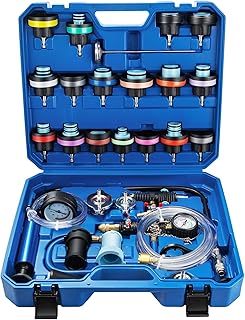
This coolant tester kit emphasizes versatility with 23 radiator adapters and a vacuum refill capability, making it suitable for a wide range of vehicles and cooling system configurations. It is a practical choice for workshops needing broad compatibility and a comprehensive set for pressure testing and refilling. Caution: verify that the included adapters cover your vehicle’s specific radiator fittings, as some models may require premium specialist adapters.
Buying Guide: Key Considerations for Vacuum Leak Test Kits
What type of testing do you perform most often? If EVAP and vacuum system leaks dominate your workflow, prefer kits with built-in smoke generation, rapid startup, and clear visual indicators. For radiator and cooling system tasks, choose coolant pressure tester kits with a broad adapter selection and reliable sealability.
- Smoke vs. pressure testing: Smoke machines provide direct visualization of leaks in hard-to-see areas, while pressure testers identify leaks via pressure loss. Consider your typical repair scenarios to balance these approaches.
- Air supply: Built-in pumps or compressors reduce setup time, but may add weight and maintenance needs. External compressors offer flexibility if your shop already uses a specific air system.
- Adapter compatibility: A wide adapter set ensures you can test a broad vehicle pool, including European and Asian makes. Confirm compatibility with your most common models.
- Durability and warranty: For professional shops, a metal build and long warranty reduce long-term risk. For home use, lighter, portable units may suffice.
- Fluid safety and handling: Ensure the kit uses automotive-grade leak detection fluids and provides clear handling guidelines to avoid damage to components and environment.
Frequently Asked Questions
- What is a vacuum leak test kit used for?
A vacuum leak test kit enables detection and diagnosis of leaks in EVAP, vacuum, intake, exhaust, and cooling systems by generating smoke or applying pressure to identify escape points.
- Should I choose a smoke machine or a coolant tester for leaks?
Choose based on the primary system you test. Smoke machines excel at locating small leaks in air and fuel-related systems, while coolant testers are ideal for radiator and cooling system issues.
- Is a built-in air compressor necessary?
Not always, but it saves time and reduces equipment clutter. If you already have a reliable air source in your shop, a standalone tester may be sufficient.
- How important are adapters in a coolant tester kit?
Adapters determine compatibility with a wide range of vehicles. A large adapter set minimizes the need for additional purchases.
- Can these tools detect slow leaks?
Yes, but response time varies. Smoke tests often reveal slow leaks visually, while pressure tests identify gradual drop-offs in pressure over time.
- Are these tools safe for all vehicle types?
Most are designed for automotive use across passenger cars, light trucks, and motorcycles. Always follow manufacturer instructions and fluid safety guidelines.