Best Variable Speed Peristaltic Pumps for Precise Liquid Dosing
When precise liquid handling matters, a variable speed peristaltic pump can deliver accurate flow control across a wide range of applications. The following selections represent top-performing models from reputable brands, featuring adjustable speed, clear readouts, and reliable tubing options. This guide helps you compare features, noise levels, and usability to choose the right pump for your lab, educational setup, or industrial process.
Overview of selected models at a glance:
| Product | Brand | Flow Rate Range | Speed Range | Key Benefit |
|---|---|---|---|---|
| INTLLAB BT100 Variable Speed Peristaltic Pump | INTLLAB | 0.06~360 mL/min | 0.1-100 rpm | Easy-to-use interface, solid flow range |
| Kamoer DIP1500 Peristaltic Pump | K KAMOER | ≤1500 mL/min | 0.1-400 rpm | Three rotors, high flow, LED display |
| TTeralmon Variable Speed Peristaltic Pump | TTeralmon | 0.07-380 mL/min | 0.1-100 rpm | Comprehensive controls with LED readout |
| Kamoer DIPump-KK300 | K KAMOER | ≤300 mL/min | 0.1-400 rpm | Four rotors, precise flow control |
| LyeXD YZ15-13A | LyeXD | 0.07-380 mL/min | 0.1-100 rpm | Durable build, clear LED indicators |
These products were chosen for a balance of adjustable speed, reliable tubing, and user-friendly interfaces. They cover a range of flow capabilities—from compact lab-scale dosing to higher-volume liquid transfer—so you can match performance to your process without overpaying for features you won’t use.
INTLLAB BT100 Variable Speed Pump
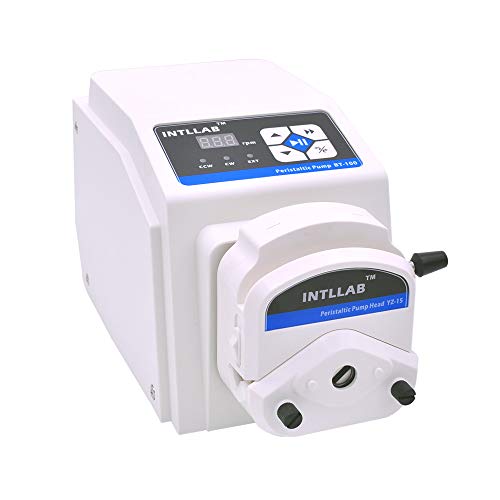
The INTLLAB BT100 offers precise speed control within 0.1 to 100 rpm and a robust maximum flow of 360 mL/min. The compact design supports straightforward operation, and the included 2-meter tubing helps jump-start experiments or small-scale production tasks. Users can rely on a clear interface to set the exact flow needed, simplifying repeatable dosing for routine procedures.
Kamoer DIP1500 Peristaltic Pump

The DIP1500 features a high flow capacity up to 1500 mL/min and a speed range of 0.1-400 rpm, driven by a precision stepper motor. Its three rotors and LED display aid in quick setup and real-time monitoring of speed and flow. This model is suitable for larger-volume dosing or rapid liquid transfer tasks where consistent performance is essential.
TTeralmon Variable Speed Peristaltic Pump

TTeralmon’s model combines a 0.07-380 mL/min flow range with 0.1-100 rpm, offering a compact driver-pump-head assembly and user-friendly clamps for tubing management. The LED display allows operators to observe speed and direction at a glance, making it a practical choice for routine metering tasks and qualitative tests where a clear readout is valuable.
Kamoer DIPump-KK300

The KK300 model provides four rotors for stable, high-precision dosing up to 300 mL/min and a speed range of 0.1-400 rpm. It uses a 24V DC supply and includes a digital readout that displays instantaneous speed and flow. The system is designed for precise control, with quick tube changes and a robust, long-life tubing option, making it well-suited for busy lab environments.
LyeXD YZ15-13A Variable Speed Pump

Scaled for industrial metering, the YZ15-13A offers a 0.07-380 mL/min flow range with a 0.1-100 rpm speed span. The build emphasizes durability, with an ABS housing and PPS pump head. The LED readout assists operators in monitoring speed, flow direction, and system status, supporting reliable long-term use in research or production settings.
Buying Guide: How to Choose a Variable Speed Peristaltic Pump
When selecting the best model for your needs, consider these factors:
- Flow Rate and Precision: Compare the minimum and maximum flow ranges and the RPM resolution. If your process requires very fine control, models with 0.1 rpm increments offer greater dosing accuracy.
- Tube Compatibility: Peristaltic pumps rely on tubing to define flow. Verify the tube materials, inner diameters, and life expectancy. Some pumps include multiple rotor configurations for different flow characteristics.
- Dispensing Stability: Pumps with multiple rotors or high-precision stepper motors reduce pulsation, improving repeatability in chemical dosing or cell culture applications.
- Control Interface: An LED or digital display, ergonomic controls, and accessible start/stop or reverse functions simplify everyday use and reduce setup time.
- Power and Noise: Determine the required voltage (12V or 24V variants are common) and consider noise levels for quiet labs or open workspaces.
- Maintenance and Tubing Availability: Easy tube replacement and widely available tubing sizes (for example S18, 17#, or BPT) extend service life and lower running costs.
- Durability and Build: Look for rugged housings and corrosion resistance if you work with acids, alkalis, or organic solvents. Stainless steel or reinforced plastics can offer added protection.
- Installation footprint: If space is limited, compare the overall dimensions and weight, especially for benchtop setups or integrated systems.
In practice, users seeking high flow for rapid transfers may favor pumps like the DIP1500 or KK300, which offer higher maximum throughput and multiple rotors. For precise, small-volume metering, models with tight rpm control and low minimum flows—such as INTLLAB BT100 or LyeXD YZ15-13A—provide steady, repeatable dosing. The TTeralmon option prioritizes a compact footprint with a clear display, useful in teaching labs and pilot lines. Finally, consider your compatibility with existing tubing and power supplies to avoid unnecessary accessory costs.