Best Venturi Forge Burner Design for DIY Blacksmithing Projects
If you’re exploring venturi forge burner design, you’ll want burners that maximize flame stability, fuel efficiency, and safe operation for DIY blacksmithing or knife-making setups. This guide highlights five venturi-oriented options and explains who each is best for, plus practical buying considerations. The selections emphasize durable construction, adaptable thread sizes, and clear safety features to help you compare quickly.
| Product | Best For | Key Benefit |
|---|---|---|
| MENSI 1″ & 1/2″ Thread Venturi Burner (1/2″x1/8″) | DIY beginners and small-forge projects | Flexible fittings and improved flame with venturi insert |
| MENSI 1″ & 1/2″ Thread Venturi Burner (1″x1/4″) | Medium forge sizes | Bigger size yields stronger flame and broader gas compatibility |
| GAS BURNER Propane Forge by LSMIITTH | High-power forging and carbon steel work | Adjustable oxygen intake for powerful, controlled flames |
| VEVOR Portable Propane Forge (3 Burners) | Hobbyists needing higher heat and capacity | Three burners with hexagonal interior for versatile loading |
| LSMIITTH Propane Gas Forge Burner | Professional-style replacement | Self-adjusting air flow for efficient operation |
MENSI Aluminum Sand Casting Venturi Burner, 1/2″ x 1/8″ Thread

The MENSI venturi burner is designed as a perfect replacement part for a DIY propane furnace forge burner. It features 1/2″ female x 1/8″ female G(BSP) threads, with an option to connect 1/2″ NPT or 1/8″ NPT fittings using sealing tape or thread glue to prevent leaks. This burner can help your forge flame become steadier and hotter by leveraging the venturi design. Best for compact or starter forge setups where interchangeability and ease of assembly matter.
- Best for small, home forge projects and quick replacements
- Limitations: May require additional adapters for non-BSP fittings
MENSI Aluminum Sand Casting Venturi Burner, 1″ x 1/4″ Thread

This larger MENSI venturi burner uses 1″ x 1/4″ female thread sizing for greater airflow capacity. It remains a practical replacement for DIY forge burners and supports 1″ NPT or 1/4″ NPT fittings with proper sealing. The bigger diameter typically yields a more robust flame, making it better for mid-size forges and thicker metal work. Choose this if you need more heat than the 1/2″ variant provides.
- Best for mid-size forges and thicker stock
- Limitations: Requires compatible fittings and proper sealing to avoid leaks
GAS BURNER Propane Forge Furnace by LSMIITTH

LSMIITTH’s gas burner is described as an all-purpose forge burner suitable for forge, melting furnaces, and foundries. It features a top air choke for adjusting oxygen intake, enabling a powerful flame when propane and oxygen are mixed. The unit is designed to handle up to high-BTU output and uses a solid brass inlet with threaded connections. Best for users needing a strong, controllable flame for knives, blades, or scrap metal processing.
- Better for: High-temperature forging and metalworking
- Limitation: Requires careful setup to balance air and fuel for neutral flame
VEVOR Portable Propane Forge, 3 Burners

VEVOR’s three-burner forge combines a hexagonal chamber with three independent heat sources. It reaches up to about 2600°F, making it suitable for larger or more varied projects. The design emphasizes efficient heat distribution and a larger working interior, and the forge body uses durable cold-rolled steel with CSA-certified components. Best for hobbyists who want higher heat capacity and more working space.
- Best for: Versatility and larger item forging
- Limitation: Heavier and bulkier than single-burner units
LSMIITTH Propane Gas Forge Burner, High-Pressure Cast-Iron Burner Head

This LSMIITTH replacement burner head uses stainless steel for corrosion resistance and durability. It features a 1″ O.D. feed tube and a 2″ O.D. air choke to optimize air-fuel balance, supporting a higher BTU with propellant efficiency. The design aims for a neutral flame at the right fuel pressure and includes a wide flame cone for efficient heat delivery. Best for professional-style retrofits or higher-demand DIY setups.
- Choose this if you want self-adjusting airflow with good gas efficiency
- Limitation: Requires proper matching of hoses and fittings to the unit
Molten Masters 1-Burner Complete Forge Kit
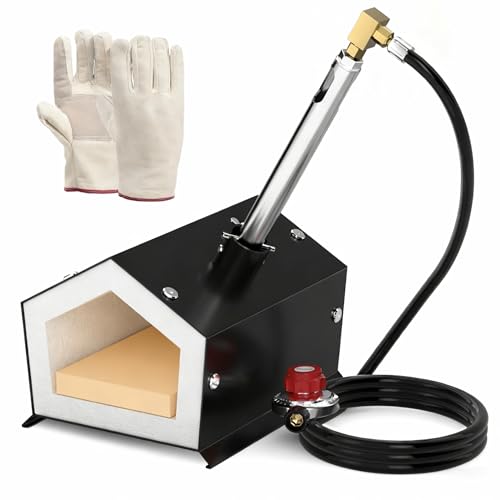
This Molten Masters kit provides an all-in-one solution: a single-burner forge with a compact footprint designed for knife making and general metalworking. It reaches up to 2600°F, aligns with standard US propane tanks, and is paired with safety accessories like heat-resistant gloves and a fire brick for insulation. Best for beginners and small studios needing a ready-to-use setup with useful safety gear.
- Better for: Quick-start forging in a home workshop
- Limitation: Open flame and heat require strict safety practices
Molten Masters 1-Burner Kit vs 3-Burner Kit: Quick Comparison
| Feature | 1-Burner Kit | 3-Burner Kit |
|---|---|---|
| Heat Output | Up to 2600°F | Similar peak, larger interior |
| Space | Compact | More interior room for bigger pieces |
| Included Safety Gear | Gloves, bricks | |
| Best For | Beginners, small projects | Hobbyists needing higher heat and space |
Buying Guide: Venturi Burner Design For Forging
What is a venturi burner and why does it matter?
A venturi burner uses the venturi effect to draw additional air into the combustion chamber. This can improve flame stability, fuel efficiency, and heat output. For forging, a well-designed venturi can help you reach consistent temperatures with less propane and safer flame characteristics.
What thread sizes and fittings should I expect?
Common sizes seen here include 1/2″ and 1″ female threads with 1/4″ or 1/8″ secondary threads. Many burners can accept 1/2″ or 1″ NPT or BSP fittings with appropriate gaskets and sealing tape. Always match the connection type to your hose and regulator, and seal properly to prevent gas leaks.
How do I choose between single vs multi-burner setups?
Single-burner configurations are ideal for compact workspaces and smaller pieces. Multi-burner models provide more heat and interior room for larger projects, but require more space and fuel management. For knives and small tools, a single burner is often sufficient; for larger workpieces or higher throughput, a 3-burner setup offers better performance.
Which safety features should I look for?
Look for heat-resistant materials, secure flame control, stable bases, and simple, accessible fuel connections. Ensure you have appropriate shielding and ventilation in your workspace. Always use proper PPE, including gloves and eye protection, when forging.
How do I maintain a venturi forge burner?
Regularly inspect threads and connections for leaks, clean any soot buildup from the flame port, and verify that air choke and regulators operate smoothly. Replace worn gaskets or seals as needed to maintain a safe, efficient flame.
What are typical use cases for these products?
Small-scale bladesmithing, hobby metalworking, sculpture, and metal art projects benefit from reliable venturi burners. For heavier forgings or larger blades, select a higher-output model with more interior space and multiple burners.
FAQ
- Q: Do these burners require a specific propane regulator?
- A: Most setups use a standard propane regulator compatible with household tanks; verify thread compatibility and gas pressure recommendations from the burner manufacturer.
- Q: Can I convert a burner to run on natural gas?
- A: Some burners support natural gas via appropriate fittings and pressures, but verify compatibility with the model and ensure safe conversion practices.
- Q: Is a venturi burner safer for beginners?
- A: A well-designed venturi burner can be easier to control due to predictable air-fuel mixing, but always follow safety guidelines and start with low heat.
- Q: What maintenance steps are essential after forging sessions?
- A: Clean soot, inspect fittings, ensure seals are intact, and store in a dry area to prevent corrosion.
- Q: Which product is best for knife making?
- A: A compact single-burner system like the Molten Masters 1-Burner or a MENSI 1/2″–1″ combo is well-suited for precise blade work.