Best 2/0 Gauge Welding Cable for Automotive, Solar, and Marine Projects
Finding the right 2/0 welding cable means prioritizing conductivity, durability, and flexibility in challenging environments. This guide highlights five top options designed for automotive, battery, solar, and generator use. Each product section explains who it’s best for, its key strengths, and a potential limitation. Use the buying guide below to compare features like conductor material, insulation, and overall length to match your project needs.
Summary table of selected products
| Product | Length | Material | Best For | Notable Feature |
|---|---|---|---|---|
| Shirbly 2/0 Gauge Battery Cable (10 ft + 10 ft) | 10 ft red, 10 ft black | Pure copper OFC | Automotive, battery banks | Soft EPDM insulation, wide operating range |
| TEMCo 2/0 Gauge (10 ft + 10 ft) | 10 ft red, 10 ft black | OFC annealed | Heavy-duty solar, inverter, RV | High flexibility jacket |
| TKDMR 2/0 AWG (10 ft + 10 ft) | 10 ft red, 10 ft black | Pure OFC | Automotive and marine wiring | Includes braided sleeving |
| iGreely 2/0 Gauge (10 ft + 10 ft) | 10 ft red, 10 ft black | OF C with tin-coated lugs | Outdoor/marine wiring | Includes multiple lug options and heat shrink |
| Shirbly 2/0 Gauge Battery Cable (15 ft + 15 ft) | 15 ft red, 15 ft black | Pure copper OFC | Long-run battery and generator setups | Flexible insulation, broad temperature range |
Shirbly 2/0 Gauge Battery Cable, 10FT + 10FT

The Shirbly 2/0 gauge cable uses pure copper OFC wire made of 2147 strands of 0.2 mm copper with a solvent-resistant EPDM insulation jacket. It is rated for up to 600 volts and performs across a wide temperature range, from -58°F to +221°F. This makes it suitable for outdoor, marine, and rugged vehicle applications. Best for: automotive battery banks, solar power connections, and generator hookups where a flexible, durable lead is needed. Limitation: users should verify exact outer diameter and voltage ratings in the table data before large installations.
TEMCo 2/0 Gauge AWG 10 Ft Black + 10 Ft Red

TEMCo’s Easy-Flex 2/0 cable features annealed OFC conductors and a rugged EPDM jacket designed for high flexibility. It is rated for up to 600 volts and can withstand extreme temperatures, making it a solid choice for solar installations, inverters, and heavy-duty automotive wiring. Best for: users who need easier routing in tight spaces and extended lengths. Better for: frequent bending or routing around engine compartments. Caution: check the nominal outer diameter to ensure fit in existing conduits or lugs.
TKDMR 2/0 AWG Battery Cable, 10FT + 10FT
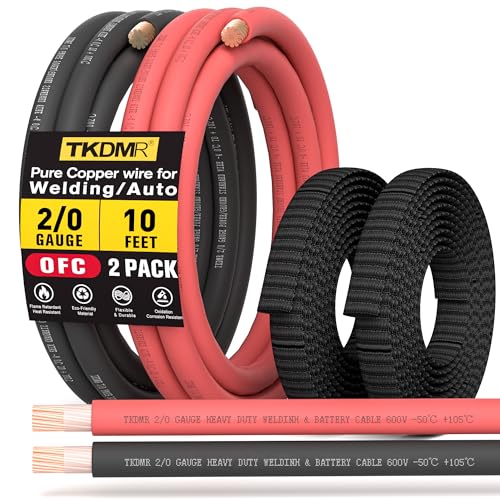
TKDMR emphasizes 100% pure OFC construction with 2147 strands of 0.2 mm copper and a heavy-duty EPDM insulation jacket. The cable is rated up to 600 volts and handles temperatures from -58°F to +221°F. It also highlights resistance to solvents and abrasion, which suits marine and harsh-industrial environments. Best for: DIY enthusiasts building robust automotive or solar systems. Choose this if you value bundled accessories, like braided sleeving, to protect wiring in high-mheat areas. Limitation: ensure compatible lugs due to closed-end lug design.
iGreely 2/0 Gauge 10 Ft + 10 Ft

iGreely offers a complete kit with 2/0 AWG welding cable plus copper lugs and heat-shrink tubing. The cable uses OFC with 2147 strands and a solvent-resistant EPDM insulation jacket. It provides a flexible, sturdy option for outdoor and marine applications and includes lug accessories designed for crimping or soldering. Best for: buyers who want an all-in-one package to save setup time. Consideration: inspect lug sizes to ensure a proper fit for your terminals and connectors.
Shirbly 2/0 Gauge Battery Cable, 15FT + 15FT

This longer Shirbly cable mirrors the 10 ft variant with extended length for bigger installations. It shares the same pure copper OFC composition and EPDM insulation, offering a broad operating range for demanding applications like battery banks and generators. Best for: installations requiring extra reach. Limitation: longer length adds weight and may require additional routing considerations to avoid stress points.
Buying Guide: Key Purchase Considerations
Conductor material matters most. Pure copper OFC supports higher conductivity and lower resistance, reducing voltage drop in high-current setups. Look for 2147 strands of 0.2 mm wire to balance flexibility and durability. Insulation quality (EPDM) affects heat, moisture, oil, and chemical resistance, especially in outdoor or marine locations.
How to choose the right length and gauge
For short, frequent header connections, 10 ft lengths may be sufficient. If you need to run from a battery bank to a distant inverter or solar array, longer lengths such as 15 ft or more reduce voltage drop but require careful routing to avoid damage. Always verify maximum current capacity (amps) and voltage ratings against your system’s requirements.
Flexibility versus ruggedness
Flexible jackets help with tight routing and easier installation. However, ultra-soft insulation may be prone to wear in abrasive environments. Choose a product with a rugged EPDM jacket for marine or workshop settings where abrasion and solvents are concerns.
Terminals and accessories
Many bundles include copper lugs and heat shrink tubing. Ensure lug openings match your terminal studs and that crimping or soldering methods are compatible with the lug design. If hardware is included, confirm compatibility with your battery terminals or inverter bus bars.
Temperature and environment considerations
Temperatures from -58°F to +221°F cover most outdoor and vehicle conditions. In hot climates or under engine heat, insulation must remain flexible and intact. For marine use, corrosion protection on lugs and coatings adds longevity in salt-air environments.
FAQ
- What does 2/0 AWG mean? It designates the cross-sectional area of the conductor. Larger numbers indicate thicker wires and higher current capacity, suitable for high-current applications.
- Is copper the best choice for welding cables? Copper OFC provides excellent conductivity and flexibility, making it a common standard for welding and power distribution in automotive and solar setups.
- Can I mix different brands in a single system? It’s possible, but ensure consistent gauge, insulation, and ratings to avoid mismatched performance.
- What kind of insulation should I look for? EPDM insulation is widely preferred for its heat, oil, moisture, and solvent resistance, plus flexibility across temperatures.
- Do I need extra accessories? Lugs, heat shrink tubing, and braided sleeving help protect connections and improve routing in complex installations.
- How do I prevent voltage drop? Use 2/0 AWG with ample conductor cross-section and minimize length where possible, especially for high-current runs.